
Gaelic Football Betting Odds in 2026: What Licensed UK Bookies Actually Offer
 Available in US
Most searches for “gaelic football betting odds 2026” come from bettors who already know the basics of fixed-odds betting but want to know where Gaelic games sit in a UK sportsbook: which markets are quoted, how the prices are built, and what the licensed operators do and do not agree on. The short answer is that Gaelic football is treated by most major UK bookmakers as a niche sport — it appears during the championship months, with a slimmer menu than football or horse racing, and the odds carry wider margins than the headline sports. That shapes what a bettor gets for the pound staked and what conditions sit inside an offer that promises more.

This page works through the practical consequences: how the sport is structured, how the numbers on the slip are built, what kinds of bonus and live-bet package the GB-licensed operators attach to it, and how a reader picks through a shortlist of ten. The data was checked against the Gambling Commission’s public register on October 30, 2026.
How Gaelic football shapes its own betting menu
Gaelic football is not a minor variant of association football. It is played by teams of 15 with up to 15 substitutes, of whom only six may be used during a senior inter-county match. The ball can be carried for four steps, soloed (dropped and caught) or kicked, and a goal — the ball below the crossbar into the net — is worth three points while a point, sent over the crossbar between the posts, is worth one. Since the 2025 rule changes, a shot taken from outside the new 40-metre arc counts as a two-point score. That scoring distinction is what gives Gaelic betting its character: a single goal swing is worth three points, so a handicap line drawn in points behaves quite differently from a soccer Asian handicap, and goal-line markets are tighter than they look in a sport where the keeper is one of six forwards.
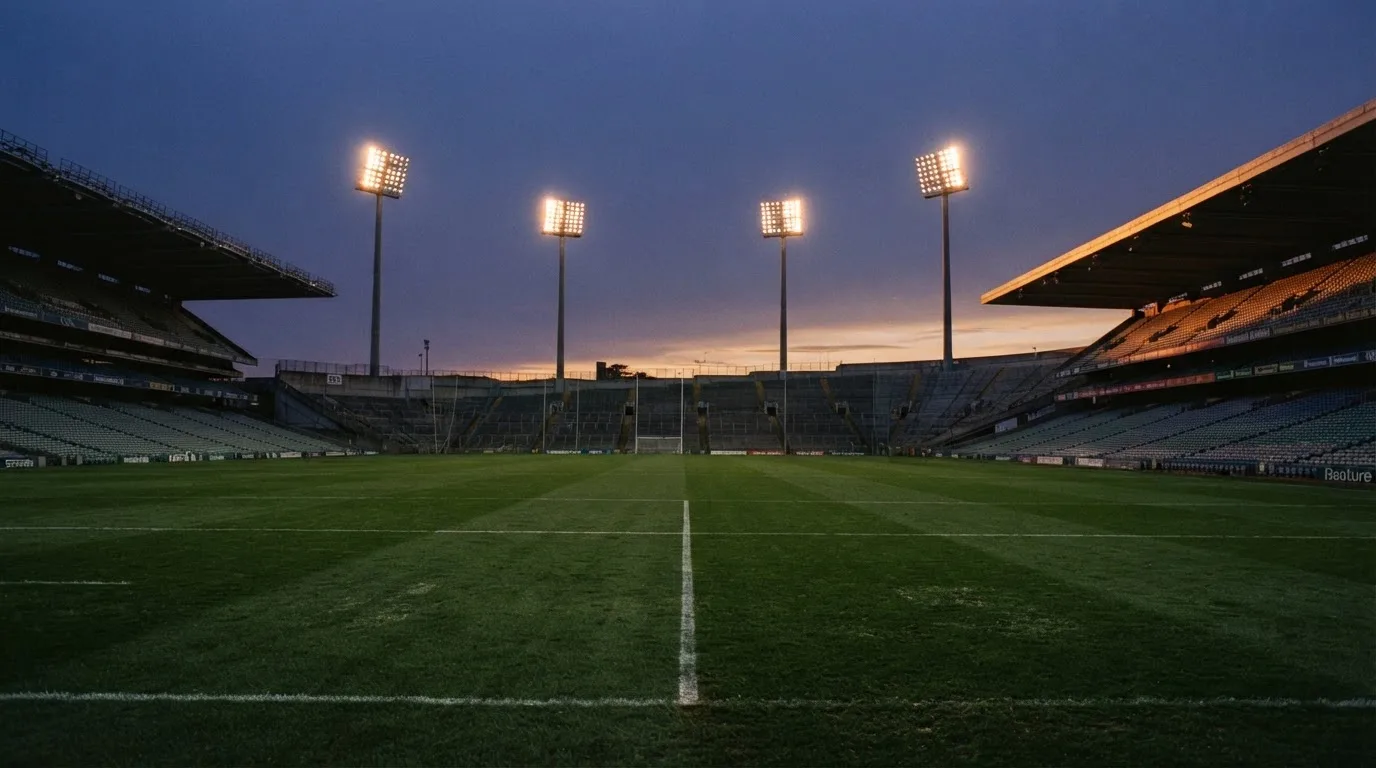
Senior inter-county fixtures last 70 minutes across two halves, with most other adult games lasting 60. The game’s governing body is the Gaelic Athletic Association, and the All-Ireland Senior Football Championship final is played each year at Croke Park, Dublin. Kerry hold the record for most All-Ireland Senior Football Championship titles, with 39. The 2026 All-Ireland Senior Football Championship final was played on 26 July 2026 at Croke Park, with Mayo beating Kerry 1–20 to 1–17 for their fourth title. The championship, the provincial series and the league competition run through summer and early autumn, which is the window when most UK bookmakers publish markets on the sport at all.
The fixture pool is the first thing that narrows the betting options. Outside of championship weekends the UK bookmaker’s Gaelic games section is thin: a couple of fixtures, a moneyline-style head-to-head, total points lines, occasionally a handicap. Premier competitions — the All-Ireland series, the National Football League, the Tailteann Cup — sit at the front of the queue; club fixtures stream in more sporadically. Anyone used to the volume of Premier League markets finds the gaelic games menu sparse, and that sparseness is itself a cost: when only eight or ten prices are quoted, the margin on those prices tends to be wider than on a 200-market football Saturday.
What the numbers look like on a Gaelic football coupon
The odds for a Gaelic football match follow the same structure as odds anywhere: a two-way head-to-head priced up at decimal odds (the standard at every UK-licensed online bookmaker), with totals and handicaps as side markets. The price carries the bookmaker’s margin built in, and that margin is the share of every pound staked the bookmaker keeps on average across all outcomes. For an illustrative market priced at decimal odds of 1.90 and 1.90 — a coin-flip two-way line such as a totals over/under — the arithmetic runs as follows: the implied probability of each outcome is 1 ÷ 1.90 = 0.5263, and the sum across both outcomes is 1.0526. The 1.0526 figure, expressed differently, is a 95.08% payout share and a 4.92% margin: the bookmaker keeps roughly five pence in every pound on this market in the long run. A more typical Gaelic football head-to-head pricing the two sides at 1.80 / 2.00 gives a payout share closer to 94.0% and a margin closer to 6.0% — wider than a Premier League 1X2, narrower than a novelty markets line.

The wider the margin, the more the bettor pays in lost expected value for every bet placed. For a bettor placing 100 singles at a flat £10 stake on a market with a 6% margin, the expected loss runs to about £60 — the stake turnover, £1,000, multiplied by the margin. The same turnover on a Premier League match at a 3% margin costs roughly £30 in expectation. The arithmetic is not unusual in itself; every bookmaker charges a margin. What matters for someone weighing where to bet Gaelic games is that the sport sits in the higher-margin tier of the sportsbook, where price-shopping actually returns money, and that explains why comparison-shopping matters more for niche sports than for headline ones.
That 4–6% range is the page’s worked illustration, drawn from a generic two-way line; individual bookmakers and individual fixtures will spread around it, and the price on the day may sit higher or lower. A specific market’s exact margin depends on the snapshot of prices the operator publishes at the moment the bet is struck, and the only reliable way to check it is to run the calculation against the prices on the slip.
The size of the coupon matters more than any single price
The volume of markets on a Gaelic football fixture tells the reader something specific about where a bookmaker sits in the sport. The bigger names — Ladbrokes, Paddy Power, bet365 — typically publish a head-to-head, totals, a small handicap range and a handful of player props during the championship months. Smaller names treat Gaelic games as seasonal: a handful of prices during the league, more during the championship, and a bare section during the closed season. The bettor who wants to combine selections into an accumulator (“acca”) on a single fixture — a same-game multi — finds more legs on the bigger books, more flexibility on prices on the smaller ones during tournament time, and an empty section most other weeks of the year.
The volume profile drives two practical consequences. First, when a championship match is on, the in-play menu opens up: the bigger books price each half separately, quote next-score markets and offer a cash-out option once the in-play has settled. Outside of championship windows the in-play product is essentially closed. Second, the same fixture sits at different prices across the ten licensed operators covered later on this page. A bettor who places an accumulator leg on one book without comparing prices will often find a 5–10% better decimal price on the same selection elsewhere — and on a niche sport, the gap is the bettor’s margin for the season.
How the odds are built and why it matters for the reader
The bookmaker’s margin is the one number that applies to every price the bookmaker publishes, and it is the number that decides how much of every pound staked returns to the bettor in the long run. It is not the same as the operator’s tax — General Betting Duty, the operator’s 15% levy on gross profits, sits inside the bookmaker’s pricing decision rather than the bettor’s slip — and it is not the bettor’s tax, since the UK bettor pays no tax on betting winnings at all. The margin is the share of stake the bookmaker keeps on average across all outcomes of one market. A 5% margin means a 95% payout share, and the bettor’s expected loss on turnover equals turnover × margin.
For the bettor, the practical read is that two operators pricing the same fixture at 1.85 / 1.95 versus 1.80 / 2.00 are not offering the same bet at slightly different prices; the tighter the book, the smaller the margin, the less the bettor pays in expectation. Comparing prices is the only way to find the smaller margin.
Crypto and anonymity at the licensed end of the market
Cryptocurrency and anonymous play sit in a different frame under UK law. Every bookmaker taking bets from customers in Great Britain needs a Gambling Commission licence, and the Commission’s identity-verification rules require a customer’s name, address and date of birth to be checked before a first deposit or bet — including when the bet is a free bet. The licensed operators in the comparison later in this page all run under that rule. A bettor cannot open an account, deposit and bet on the same evening without surrendering those details, regardless of which payment rail funds the account.
What changes between operators is the payment menu. Several of the ten licensed operators do not publish cryptocurrency support at all; those that do, route it through third-party payment processors and convert to pound sterling before crediting the account. The licensed end of the market does not offer a pseudonymous option. A reader looking for bitcoin-funded betting on Gaelic games is, in practice, choosing between a licensed bookmaker that accepts a crypto-rail payment (the funds still clear into a verified, named account) or an unlicensed offshore book that operates outside the Commission’s licence frame. The first option trades the loss of some payment-route privacy for the protections the licence confers: GAMSTOP self-exclusion, Commission complaints routes, the 10x bonus cap and the £150 financial vulnerability check. The second option offers the privacy and nothing else. Both have consequences: the first is verifiable through the Commission’s public register, the second is not — and a bet on an unlicensed site has no British consumer redress if the funds are withheld.
Within the licensed set, the payments menu typically includes debit card, bank transfer and a handful of e-wallets. Some operators also offer prepaid options. The licensed operators do not, as a group, publish a uniform payment list, and the specific options for each of the ten sit in the comparison table further down the page. That table also notes where the operator’s own terms fail to specify cryptocurrency handling — a consistent feature of the licensed end of the market.
Offers and free bets on a niche sport
A bookmaker welcome offer sits behind a wagering requirement — the number of times the bonus or the qualifying stake must be turned over before winnings become withdrawable. Since the rule came in on 19 January 2026, no licensed UK bookmaker can attach a wagering requirement higher than 10x to a bonus, and no bonus may be tied to gambling on two or more product types at once. A £10 bonus capped at 10x takes £100 of qualifying bets to clear — a meaningful but not punishing bar for the bettor who is betting anyway. The £10 free-bet cluster that several of the licensed operators publish for new sportsbook customers usually carries no wagering requirement at all, because the bonus is paid in free bets rather than in cash: the free bet is the bonus, the constraint is that the stake is usually not returned with a win. A £10 free bet at decimal odds of 3.00 that wins returns £20 (£10 × (3.00 − 1)), which is £20 of withdrawable cash to the bettor. The £10 stake does not come back.
A free-bet token is not a deposit-match, and the difference is worth spelling out. A 100% deposit match to £25 means a £25 deposit gives a £25 cash bonus subject to the wagering cap; a 100% matched free bet to £25 means the £25 stake is the free-bet value, and any winnings come from that stake. The mark “free” in a free-bet token describes the stake, not the win. Mixed-product bonuses — offers that require a sports bet to release a casino bonus, for example — are now banned on the licensed UK market, so the kind of package a reader saw in 2022 is no longer being offered.
Reading the small print on a Gaelic football offer
The offer the bettor sees at sign-up is the headline; the conditions are where the cost lives. Six details do most of the work:
- The qualifying bet: stake size and minimum number of selections. Several of the licensed operators gate the welcome offer on a first bet at minimum odds of 1.60 or higher; a Gaelic football head-to-head at 1.60 is the kind of price a gambler places every week, but a Gaelic games accumulator at 1.60 across three legs is a different bet.
- The minimum price for the qualifying bet or for any bet contributing to wagering. A free bet redeemed at 1.20 is a low-value bet redeemed; the same free bet at 3.00 is a useful one.
- The wagering multiplier, which is capped at 10x on bonuses by the Commission’s current rule.
- The expiry window on the bonus or free bet — typically seven days from issue, sometimes shorter.
- Payment-method restrictions. The UK banned credit-card deposits for gambling in April 2020, so the question of whether e-wallet deposits qualify for the offer is the one that determines whether the offer is reachable.
- Whether stake returns with a win. A “free bet” does not return the stake; a “stake returned” special does. The difference is a multiplier on the bet’s real value.
For Gaelic football specifically, the practical read is that the welcome offers in this market are modestly sized — £10–£25 in free-bet value for the GB-licensed cluster — and reward the bettor who places their qualifying bet on Gaelic games at minimum odds of 1.60 or higher without much fuss. The offers are not large enough to dwarf the bookmaker’s margin in any single bet, and they are not so tightly conditional that an ordinary punter cannot clear them.
Live betting, cash out and the championship window
Live betting on Gaelic football is a championship product. Most UK bookmakers do not price the sport in-play during the closed season, and the menu during the league or championship is narrower than the head-to-head sports — typically 8–20 in-play markets on a senior inter-county fixture, often fewer. The headline sportsbooks — bet365, Ladbrokes, Paddy Power — typically offer an in-play head-to-head update, a total-points line that adjusts as the game runs, next-score markets and a cash-out option once the action has settled. The smaller operators on the GB-licensed shortlist thread the same product through smaller menus.
Cash out is a feature that lets the bettor close a position before the bet has run its course. The cash-out price is a function of the current state of the bet and the bookmaker’s own margin; it is rarely equal to the bet’s true value at the current state of play. The cash-out price is set so that the bookmaker keeps a margin on the closed position, and on niche sports that margin is wider. The bettor’s decision is whether to lock in a smaller certain profit (or a smaller certain loss) versus holding the bet to settlement. There is no free option in that trade.
Bet Builder and the same-game multi
A bet builder (called “Bet Builder” at bet365, “acca builder” at Midnite and equivalents elsewhere) lets the bettor combine markets from a single fixture into one combined price. The sportsbook prices each leg, multiplies the decimal odds together and takes a margin on the combined ticket. The marketing claim is “build your own bet”; the arithmetic is a price the bookmaker has constructed. The bettor who builds a same-game multi on a Gaelic football fixture is buying the bookmaker’s assembled price, and the wider margins on a niche sport typically show up on the assembled price as well.
The clever use of a builder on a niche sport is to identify markets the bookmaker has priced loosely — a total-points over/under at the start of a match when injury news is unpriced, for example — and combine them with a head-to-head. That kind of trade is also the kind that gets reviewed more carefully by the bookmaker’s trading desk: large stake-sized same-game multis on niche sports trigger account reviews more often than the same stake on a Premier League fixture. The bettor who treats the builder as an analytical tool reads the price; the bettor who treats it as a marketing freebie pays the margin.
Predictions, betting tips and the language of “analysis”
The search term “betting tips gaelic football” pulls in tipsters, model-based forecasts and the pageant of previews published during the championship. None of these forecasts is reliable enough to be a basis for betting. The bookmaker’s margin sits inside every price, the betting public’s biases are written into the market, and a forecast that beat the closing line consistently would be arbitraged out of the market by anyone who could see it. The honest read is that a tip is opinion published at a price, and the price is what determines whether the opinion is worth following.
What a serious reader does with tipster material is measure the tipster. A tipster’s record across a season, the average odds at which tips are given, the average stake size and the staking discipline all say more than any individual preview. A model-based forecast is no better or worse than a human one; both compete against the bookmaker’s margin, and the difference between the two is who is publishing the analysis. The page does not endorse tipsters or predict outcomes, and it does not name anyone as a winner in advance of a match: a settled match’s result is news, not a forecast.
A practical alternative to following a tip is to do the analytical work the bookmaker’s price implies. The bookmaker’s margin can be calculated from any market by taking 1 minus the sum of the reciprocals of all the prices. A market with a sum of 1.05 has a 5% margin; a market with a sum of 1.10 has a 10% margin. Comparing margins across bookmakers for the same fixture is what a serious bettor does, and it is the work that compounds: the 3% gap between books compounds across a season’s betting volume, and a smaller-margin bookmaker is worth the inconvenience of holding an account there.
From a single bet to a small acca
A single is one bet on one selection. The return is stake × decimal odds; the profit is stake × (decimal odds − 1). A double is two singles whose odds multiply together; the same arithmetic, multiplied across two legs. An accumulator (or “acca”) extends that across three or more legs, with the total stake at risk until the last leg has settled. The price of an accumulator is the product of each leg’s decimal odds, and every leg adds its own margin into the multiplied price. An accumulator of four legs each at decimal odds of 1.60 carries the combined stake at risk against a combined price of 6.55. The implied probability is 1 ÷ 6.55 ≈ 0.153, or about one chance in six-and-a-half, and the bookmaker’s combined margin is wider than any single leg’s margin because margins multiply through the accumulator’s price.
A bet builder product works the same way under the hood, except the legs come from one fixture rather than from several. The bookmaker sets the assembled price; the bettor can compare the assembled price to the equivalent single or smaller multiple. Most of the time, the smaller multiple on two separate matches at the same combined odds is the cheaper ticket. The bet builder is a convenience product that the bettor pays a margin on top of the smaller-multiple equivalent.
Each-way and the place terms that come with it
Each-way betting is a UK and Irish convention most common in horse racing but available on a handful of other sports at some bookmakers. It is two bets of equal stake — one on the win, one on the place — so a £10 each-way bet costs £20 in total stake. The place terms vary by sport and bookmaker: typically a quarter of the win odds for the place, occasionally a fifth, sometimes a third. The place terms are published in each bookmaker’s betting rules, and the bettor who picks a market with a fifth-of-odds place over a quarter-of-odds place keeps a noticeably bigger fraction of a near-miss payout. Each-way markets on Gaelic football are rare; the bettor is more likely to find them on the championship outright or on player-specific markets at a major tournament than on a regular head-to-head.
Spread betting, exchanges and the world alongside fixed odds
A betting exchange lets one customer back a selection and another lay it — bet against it — at prices set by the customers themselves, with the exchange taking a commission on net winnings. An exchange is licensed in Great Britain under the betting intermediary category on the Commission’s public register. Pricing on an exchange tends to be tighter (lower margin) than on a traditional bookmaker because the customers set the prices and the exchange takes only a commission. Spread betting, on the other hand, is a different product: stake-per-point losses or wins on a quoted spread, with losses potentially exceeding the deposit. Spreadex is regulated by the FCA for spread betting and by the Gambling Commission for fixed-odds betting, and its site warns that spread betting losses can exceed the deposit. Spread betting on Gaelic football is niche — the bigger spread books run the sport during the championship — but the product is there for the readers who want it, and the risk profile is the one to remember.
Sporting Index sits in the same category. The brand lets customers switch between fixed odds and spread betting, with in-play betting, Bet Builder for football, auto cash-out and Multi-Markets. The fixed-odds side of Sporting Index is run like a regular sportsbook; the spread side is a financial product where the stake is at risk per point of movement. The product split matters because the regulatory split mirrors it. A spread bet is not a fixed-odds bet and is not covered by the same Commission protections or marketing rules.
Where Gaelic games sit in a UK sportsbook
The UK sportsbook’s Gaelic games section opens during the National Football League, fills during the provincial championships, peaks around the All-Ireland series and then thins out for winter. Premier competitions — the All-Ireland Senior Football Championship, the National Football League, the Tailteann Cup for the second tier — get the broader market menu; club fixtures get the bare-bones menu or none at all. The bettor looking to build a position on Gaelic games at a UK bookmaker is really looking at a two-month summer season for the bulk of the action.
The narrow window and the small market menu drive the practical position. The bettor who wants any volume on Gaelic games needs to do it during the championship, when the bigger sportsbooks run in-play, when smaller books publish props and when the outright winner market sits at the front of the coupon. The bettor who wants to compare prices across books finds the best spread in the head-to-head and the championship winner markets; that is where the licensed books are most likely to be priced apart.
The same number on every licensed book
The Gambling Commission’s public register is the only public test of whether a brand holds a GB remote betting licence. The register can be searched by business name, trading name, domain or account number, and it is updated as licences are issued, varied or surrendered. The Commission’s handling of a brand’s licence status — including any current or past regulatory action — is also a matter of public record. The page’s comparison table carries the Commission’s account number for each of the ten licensed brands, and a reader can verify the licence by searching that number on the register.
Verification before the first deposit is now standard across the licensed market. The Commission’s anti-money-laundering rules require name, address and date of birth to be checked before the first deposit or bet, including with a free bet or bonus. The same rules mean a British named-account rule sits inside every licensed operator’s signup — funds must come from an account in the customer’s own name. The licensed operators in this comparison use the same identity check, and the check is one of the real differences between a licensed book and an unlicensed one.
The ten compared
The comparison below ranks ten UK-licensed operators on the fields the reader cares about for Gaelic games betting: the GB licence number and holder, and what the operator’s own terms state on the things the page has covered. The list is not a ranking by preference — every brand is licensed, every brand is a real option — and the descriptions of each, set out in the operator reviews that follow, take a position on what each is best suited for.
Comparison table
| Brand | Gambling Commission remote licence and holder | What the operator’s terms state on the key’s subject |
|---|---|---|
| Ladbrokes | 054743-R-330863-014 (LC International Limited) | The Ladbrokes app is published by Entain Operations Limited and carries a strong UK sportsbook product across the head-to-head sports, with regular odds boosts and acca insurance on football and other headline sports. Gaelic games appear during the championship. |
| Paddy Power | 039439-R-319330-013 (PPB Counterparty Services Limited) | The app covers football, horse racing, boxing, rugby, tennis, golf, darts, snooker and F1, with Gaelic games added through the championship window. Money-back specials and price boosts are recurring offers on the headline sports, occasionally crossing over into Gaelic games. |
| DAZN Bet | 048756-R-327274-019 (DZBT Limited) | Deposits start at £5 by debit card, Apple Pay, Paysafecard, Trustly and Skrill, and at £20 by PayPal, with no processing fees. The sportsbook is part of a broader DAZN streaming proposition. |
| BetUK | 039198-R-319450-029 (LeoVegas Gaming PLC) | The sports welcome offer is four £10 free bets (two football accumulators of 4+ selections and two multiples of 2+) to new customers depositing £10 or more and placing a sports bet within 7 days of registering; valid for 7 days, with opt-in required. |
| Sporting Index | 027343-R-308898-011 (Sporting Index Limited) | Lets customers switch between fixed odds and spread betting, with in-play betting, Bet Builder for football, auto cash-out and Multi-Markets. Spread betting losses can exceed the deposit. |
| BoyleSports | 039469-R-319383-025 (Boylesports Enterprise) | The sports welcome offer for UK players is £20 in free bets when a £10 bet is placed (€30 in free bets for a €10 bet for Irish players). |
| Lottoland | 038991-R-319408-020 (EU Lotto Limited) | The app combines casino, lottery betting, sports betting and scratchcards, and is licensed by the Gambling Commission for customers in Great Britain. |
| Octobet | 062545-R-337248-006 (Octopus Game Limited) | The sportsbook welcome offer is 50% back as a free bet up to £50, plus a £10 casino bonus. |
| Kwiff | 044448-R-323408-017 (Eaton Gate Gaming Limited) | Licensed by the UK Gambling Commission, the app is operated by Spryme Ltd and carries a 17+ App Store age rating. “Surprise bets” and acca-style price boosts sit at the front of the product. |
| Betboro | 044181-R-324363-007 (Webmedia Development N.V.) | The sports welcome offer is a 100% matched free bet of up to £25 on the first qualifying wager, requiring a debit card deposit of at least £10 and a first bet of £5 to £25 with at least three selections each at 3/5 (1.60) or higher. |
The next ten sections carry each of these brands in turn — what they offer a Gaelic football bettor, and where they fall short.
Ladbrokes
Ladbrokes runs the broadest sportsbook on the list and treats Gaelic games as part of the headline menu during the championship, with a thinner product outside the season. The app carries Entain’s wider pricing engine: odds boosts, accumulator insurance and bet builder across football and other sports, with Gaelic football typically slotted in at a basic level (head-to-head, totals, small handicap) during the championship window. For a Gaelic football bettor, Ladbrokes is the breadth pick — volume of markets on a championship weekend is the strongest of the ten, in-play pricing is the deepest, and cash-out is reliable. The trade-off is that headline-sports volume comes at the cost of any pricing-edge specifically on the niche; Ladbrokes’ Gaelic games prices are typically close to the wider market average rather than at the front of it.
Paddy Power
Paddy Power sits close to Ladbrokes — the same Entain-group pricing machinery, the same championship-window treatment of Gaelic games — and adds the brand’s signature money-back specials and price boost culture. For a Gaelic football bettor, the practical difference between Paddy Power and Ladbrokes is which one’s existing account you already hold: the underlying product is similar, the promotions are recurring rather than headline-sized, and the prices move in line across the group. Where Paddy Power can pull ahead is on a specific event boost that lands during the championship and gives a slightly better decimal price on a head-to-head than the wider market — a useful moment for the bettor who already has an account.
DAZN Bet
DAZN Bet is the sportsbook arm of the streaming service, with a payments menu built around the same low-friction deposits the broadcaster wants on its subscription side. Deposits start at £5 by debit card, Apple Pay, Paysafecard, Trustly and Skrill and at £20 by PayPal, with no processing fees — one of the cleaner deposits lists on the licensed UK market. The sportsbook covers the headline sports at a competitive level; Gaelic games feature during the championship window, with a basic menu. DAZN Bet is the deposit-convenience pick, and for a bettor whose main sportsbook carries wagering requirements that bite, the £5 deposit minimum and the lack of processing fees make the operator a useful secondary account to keep funded for an opportunistic price.
BetUK
BetUK runs the LeoVegas-group sportsbook product, narrower than Ladbrokes or Paddy Power, but with a steady welcome offer in the form of four £10 free bets to new customers depositing £10 or more and placing a sports bet within 7 days. Two of the free bets are football accumulators of 4+ selections, two are multiples of 2+, valid for 7 days with opt-in required. For a Gaelic football bettor, the offer is reachable on a single Gaelic fixture or a mixed-sport multiple; the condition is straightforward and the window is short but workable. The trade-off is product depth: BetUK’s menu on Gaelic games during the closed season is thin, and even at championship time the selection of props is shorter than the headline sportsbooks. It is a reasonable choice for the bettor who wants the welcome offer and a low-friction account; less so for the bettor who wants the deepest championship menu.
Sporting Index
Sporting Index sits in a different category — a bookmaker that runs a fixed-odds sportsbook and a spread-betting book side by side, regulated accordingly. The fixed-odds side is comparable to the smaller UK sportsbooks in product depth, with in-play betting, Bet Builder for football, auto cash-out and Multi-Markets. The spread side lets the customer move a stake-per-point on a quoted spread on Gaelic games during the championship — a product some readers will look for specifically. The honest read on Sporting Index is that it is a fixed-odds sportsbook with a spread-betting option, not the other way around, and the spread-betting side carries the FCA-regulated spread product’s profile: losses can exceed the deposit, and a stake sized for fixed-odds betting can be the wrong size for the spread side. The product fits the reader who knows what spread betting is and wants it on Gaelic football; it is the wrong pick for the reader whose only product is fixed odds.
BoyleSports
BoyleSports has a parallel UK and Irish operation, with the sports welcome offer for UK players at £20 in free bets when a £10 bet is placed, and €30 in free bets for a €10 bet for Irish players. The split matters because the UK bookmaker is the relevant entity for a Great Britain customer and the £20 free bet is the offer that applies; an Irish-style welcome on a UK-licensed site would not survive the Commission’s framework. BoyleSports’ Gaelic games menu is competitive — the Irish operation gives it a deeper fixture list than the average UK bookmaker — and the UK’s smaller bookmaker status means the prices on Gaelic games can sit apart from the wider market. The trade-off is product depth outside Gaelic football and horseracing: BoyleSports is a strong choice for the championship and a thinner one for a year-round multi-sport account.
Lottoland
Lottoland runs a casino, lottery betting, sports betting and scratchcards platform under one account, holding a Commission licence for customers in Great Britain. The sportsbook is the smaller side of the business — Gaelic football is on the menu during the championship window with a basic list of markets, and the rest of the year the book runs lottery draws at the front. The proposition is not primarily a sportsbook, but the licence is genuine, the verification is the same as the headline sportsbooks, and a customer who already has a Lottoland account for lottery betting can use it for occasional Gaelic football markets. The honest read is that Lottoland is a secondary-pick sportsbook for the bettor whose primary bookmaker is somewhere else; it is not a strong primary pick for the dedicated Gaelic games bettor.
Octobet
Octobet is one of the newer UK-licensed sportsbooks, with a sportsbook welcome offer of 50% back as a free bet up to £50, plus a £10 casino bonus. The “50% back” framing means the free-bet value is half the qualifying loss up to £50, and a bettor who places a £100 first bet that loses walks away with a £50 free bet — a meaningful if not market-leading offer. The £10 casino bonus sits alongside and is a small extra. The trade-off for Octobet is product depth outside the welcome offer: Gaelic games appear in the championship window with a basic menu, the in-play product is narrower than the headline sportsbooks, and the bet builder is limited. Octobet is the welcome-offer pick for the bettor planning a small first bet; less so for the bettor looking for an all-season sportsbook.
Kwiff
Kwiff is a UK-licensed sportsbook whose marketing has centred on “surprise bets” — random odds boosts the operator applies to selections a customer has added to a bet slip — alongside the standard acca insurance and price-boost menu. The product is licensed under the Gambling Commission, operated by Spryme Ltd, and the app carries a 17+ age rating. For a Gaelic football bettor the practical read is that Kwiff is a working sportsbook at the championship, with the surprise-bet mechanic giving an occasional better price on a Gaelic game than the headline sportsbooks. The trade-off is volume: the championship menu is decent but not deep, and the in-play product is narrower than Ladbrokes or Paddy Power. Kwiff is the surprise-bet pick for a bettor who already uses one of the headline sportsbooks and wants a second account that pays them occasionally to use it.
Betboro
Betboro runs the 100% matched free bet up to £25 welcome offer, with a debit-card minimum deposit of £10 and a first bet of £5 to £25 with at least three selections each at 3/5 (1.60) or higher. That selection rule is the relevant gate: a single bet on a Gaelic football match at 1.60 will not clear the gate, and the qualifying bet needs three selections at 1.60 or higher to qualify. For a bettor building a small qualifying acca from championship fixtures, the offer is reachable; for a bettor planning a single big bet on one match, it is not. The wider sportsbook product is on the narrow side outside the welcome mechanic; Gaelic games get a basic championship menu. Betboro is the welcome-offer pick for the bettor planning to build a qualifying acca from championship games; less so for the bettor looking for a year-round multi-sport book.
How the licence sits across the ten
All ten operators in this comparison carry a Gambling Commission remote betting licence for customers in Great Britain, with the categories on the public register including remote general betting standard (real events), and in some cases also a remote betting intermediary licence for exchange functionality. Each licence number cited earlier is searchable on the Commission’s public register, and a reader can verify the licence by searching the account number or trading name. The Commission’s register is the whole test of whether a brand holds a GB licence, and there is no other check that holds the same status.
A reader looking for the brand that is “the most licensed” is asking the wrong question. The Commission’s framework treats every remote general betting standard (real events) licence as covering the same categories, and the differences between the ten operators sit in product depth, payments menu, welcome offer and pricing strategy rather than in the licence itself. A licence is a baseline; the differences show in what the operator does with it.
Multiple brands on this list run under the same parent licence. Ladbrokes and Paddy Power both sit inside the Entain group, with separate site licences under separate Commission account numbers; bet365, BetUK and Sporting Index run under separate licences through their respective holders; BoyleSports operates under its own licence holder. The fact that two brands share a parent does not change the reader’s protection: each licence stands on its own Commission account number on the public register, and a complaint about one is a complaint about that licence holder, not the wider group.
Verification, age and the minimum legal requirement
The minimum legal age for gambling in Great Britain is 18. The Commission’s identity verification rules require a customer’s name, address and date of birth to be checked before the first deposit or bet — including with a free bet or bonus. That verification happens across the licensed end of the market; an unlicensed site cannot offer the same protection because the rule does not apply to it. The reader who values verification as a protection will find it consistent across the ten operators in this comparison; the reader who values it as a privacy cost will find it unavoidable.
The Commission’s public register is the operational source for any reader who wants to verify a brand themselves. Searching by business name, trading name, domain or account number brings up the licence details and any current regulatory action. A new customer looking at a brand that does not appear on the register is looking at an unlicensed operator, and the practical consequence is set out in the section on offshore play elsewhere on this page.
What the regulator does, and what it does not do
The Gambling Commission licenses the whole commercial betting market in Great Britain under the Gambling Act 2005, which covers England, Scotland and Wales; Northern Ireland sits outside the Act and has its own older law. Since the Gambling (Licensing and Advertising) Act 2014, an operator whose remote facilities are used in Great Britain needs a Commission licence wherever it is based — a Curaçao, Maltese or Gibraltar licence is not a substitute for the GB licence. A reader in Great Britain placing a bet with an operator that does not hold a Commission licence is betting outside the framework that gives them the protections of the Act.
The Commission’s licence categories matter because they define what an operator is permitted to do. The relevant categories for the brands on this comparison are remote general betting standard (real events) — the licence for a regular online sportsbook — and remote betting intermediary, the licence for a betting exchange. A bookmaker may hold one, both or more categories on the same account number. The category tells the reader what kind of product the licence covers; it does not tell the reader the size of the menu. A licensed operator may run a thin Gaelic games menu during the closed season and still hold the same licence as a deeper one during the championship.
The Commission’s role does not extend to advertising. Advertising for gambling is regulated by the ASA under the CAP Code (non-broadcast) and BCAP Code (broadcast), with the LCCP’s marketing rules sitting alongside. CAP Code section 16 says marketing must be socially responsible, must not be of strong appeal to under-18s, and no one who is or seems to be under 25 may be featured gambling. That rule concerns who may appear in the advertisement; it does not place an age limit on who may bet. The reader looking for the protection that no one under 25 will see a particular ad is in scope of the CAP Code rather than the Gambling Act.
The financial vulnerability check and the deposit cap
A financial vulnerability check (Licence Condition 3.4.4, in force since 30 August 2024) applies to licensed remote betting when a customer’s deposits minus withdrawals exceed £150 in a rolling 30 days. It is a public-record check — for example, bankruptcy or county court judgments — not an income check and not a credit reference check. A bettor whose monthly net spend crosses the £150 threshold can expect a check; the check looks at public-record financial distress rather than income or net worth.
A separate set of customer-protection requirements, the so-called affordability checks announced in a staged plan from the Commission on 7 July 2026, has no start date at the time of writing. The phrase “affordability checks” in the press typically refers to these staged financial risk assessments; the announcements do not yet amount to a binding rule and the framework remains an announced plan. Reading “affordability checks in force” on another page may be premature; the correct framing is “announced, staged, no start date”.
Deposit limits (Remote Technical Standards 12) require operators to offer a gross deposit limit on a fixed time frame, with the first changes applying since 31 October 2025 and a second phase postponed to 30 September 2026. Whether the second phase is live is not established at the time of writing; the deposit limit exists on the operator’s side as a matter of choice rather than a state-set ceiling. There is no state-set deposit or loss ceiling for betting; the customer sets the limit, the operator enforces it, and the customer can change it on the operator’s notice.
Where to get help if it is not staying fun
GAMSTOP is the national multi-operator online self-exclusion scheme, mandatory as a licence condition for online operators since 31 March 2020. The exclusion periods are six months, one year, five years, or five years with auto-renewal. After the minimum period, the exclusion stays in place for a further seven years unless the customer asks GAMSTOP to remove it, and GAMSTOP’s own communication on this point clarifies the seven-year run-out. GAMSTOP covers online sites and apps; betting shops use a separate service. The bettor wanting to stop gambling across multiple licensed sites has a one-stop route; the bettor who wants to stop across both licensed sites and offline shops needs to register with both schemes.
GamCare runs the National Gambling Helpline, a confidential service for anyone affected by gambling harms in Great Britain. The line is open 24 hours a day, every day. GambleAware funds a wider programme of treatment and prevention. NHS gambling clinics provide specialist NHS treatment for gambling harms in parts of England. Gamblers Anonymous runs peer-support meetings across the country. A reader who wants help has a tier of public routes that do not require contact with the operator whose site they used.
Fitzwilliam Sports, one of the operators on a similar GB-licensed shortlist for narrower sport markets, links to GambleAware, GamStop and Gamblers Anonymous from its home page, alongside instant deposits, fast withdrawals, timeouts and deposit limits. The pattern is consistent: licensed operators offer timeouts, deposit limits, reality checks and self-exclusion routes; the routes to external help are surfaced across the licensed end of the market. The reader who needs them does not have to find them.
The reality of the offshore alternative
Operating gambling facilities for customers in Great Britain without the licence the Act requires is an offence aimed at the operator. There is no offence aimed at the customer who merely bets on an unlicensed site. The framing of the choice is the loss of certain protections: no GAMSTOP coverage, no Commission complaints route, no approved dispute-resolution body, no British consumer redress if funds are withheld, no obligation on the operator to honour the 10x bonus cap or the £150 financial vulnerability check. The unlicensed operator also does not verify the customer’s name and address before the first deposit; that is the absence, not the presence, of a check. The practical read is that an unlicensed site offers a different product — privacy over the standard protections — and the choice is the bettor’s to make with eyes open.
Enforcement against unlicensed operators runs through disruption rather than blocking: cease-and-desist notices, search-engine referrals, work with registrars, hosts and payment providers. The Commission has been given, or is about to receive, court-order DNS blocking powers. ISP-level blocking of unlicensed operators is not in operation as a general rule. The licensed end of the market is the safer route in the sense the Act uses; the unlicensed end is a different product rather than a different label for the same thing.
A final note on the comparison
The page’s worked comparison across the ten operators is a snapshot of the operator’s public-facing terms at the time of writing, checked against the Commission’s public register and the operator’s own published welcome offer, payments menu and product description. The prices on individual fixtures, the size of welcome offers and the details of payment methods may change; the licence status is the stable part of the picture. The reader who wants to verify the licence can do so by searching the account number on the Commission’s public register, the one route that does not depend on the operator’s own marketing.
The serious read for a Gaelic football bettor is that the sport sits in the higher-margin tier of a UK sportsbook, with a narrower market menu than the headline sports and a real championship window. Comparing prices across two or three licensed operators before placing a bet returns more over a season than picking a single welcome offer. The licensed market gives the bettor a comparable product on every brand, with the practical differences in product depth, payments menu and welcome offer rather than in the licence itself. The unlicensed end of the market trades those protections for a different set of conditions; the choice is the bettor’s.
Frequently Asked Questions
How do I bet on gaelic football?
Pick a licensed UK bookmaker from the Commission’s public register, complete the standard identity check, and find Gaelic football in the sportsbook — usually under “GAA” or “Gaelic Games” — during the championship window. The main markets are head-to-head, total points and a small handicap range, with in-play available at the bigger books during the All-Ireland series.
How can I check a bookmaker holds a Gambling Commission licence?
Search the Commission’s public register by business name, trading name, domain or account number, all available on the register page. The register lists each licence holder with their licence type, the categories on the licence and any conditions, and is the authoritative source for licence status in Great Britain.
How is the return on a bet worked out from the stake and the odds?
Decimal odds × stake is the return where the stake is included, and decimal odds − 1 × stake is the profit. Decimal odds of 3.00 on a £10 stake return £30 (£20 profit); decimal odds of 1.50 on a £10 stake return £15 (£5 profit). The calculation works the same for any selection.
What is the bookmaker’s margin and how can it be seen in the odds?
The margin is the share of every pound staked the bookmaker keeps across all outcomes of a market, calculated as 1 minus the sum of the reciprocals of all the prices. A two-way market priced at 1.90 and 1.90 has a payout share of about 95% and a margin of about 5%; lower margin markets are tighter and pay back more in expectation.
How do fractional odds such as 5/1 convert to decimal odds such as 6.00?
The formula is decimal = (a ÷ b) + 1, so 5/1 → (5 ÷ 1) + 1 = 6.00, 11/4 → (11 ÷ 4) + 1 = 3.75, and evens (1/1) → (1 ÷ 1) + 1 = 2.00. The conversion is mechanical and the same for any fractional price.
Which tools for controlling play does a licensed bookmaker have to offer?
A licensed UK bookmaker must offer deposit limits, timeouts, reality checks, self-exclusion, links to GamCare and integration with GAMSTOP for online self-exclusion. The £150 financial vulnerability check applies after 30 days when deposits minus withdrawals cross the threshold, and is a public-record check rather than an income or credit reference check.
Rugby, cricket & Gaelic – Motorracingtips.com
Content created by the «Motorracingtips.com» team
