
Best Betting Apps UK for 2026
 Available in US
A punter who only knows the desktop version of a bookmaker is half a step behind on price boosts, in-play markets and acca builders that live exclusively in the app, while missing out on Face ID logins that turn a three-tap deposit into a one-glance unlock. Yet the app is also the place where 18+ verification, GAMSTOP exclusions and the £150 financial-vulnerability check sit between a deposit and a placed bet, so the choice is not as simple as “download the same brand I already use on the website.” The mobile sportsbook market in Great Britain has matured into a thin layer of well-financed operators and a long tail of niche indies, and the question worth asking of any of them is whether the brand, the licence and the function the app actually delivers line up. That is what the rest of this page works through — the landscape, the rules that govern it, the bonuses and payment rails that change with it, and a side-by-side of ten Gambling Commission-licensed bookmakers whose apps a UK resident can install today.
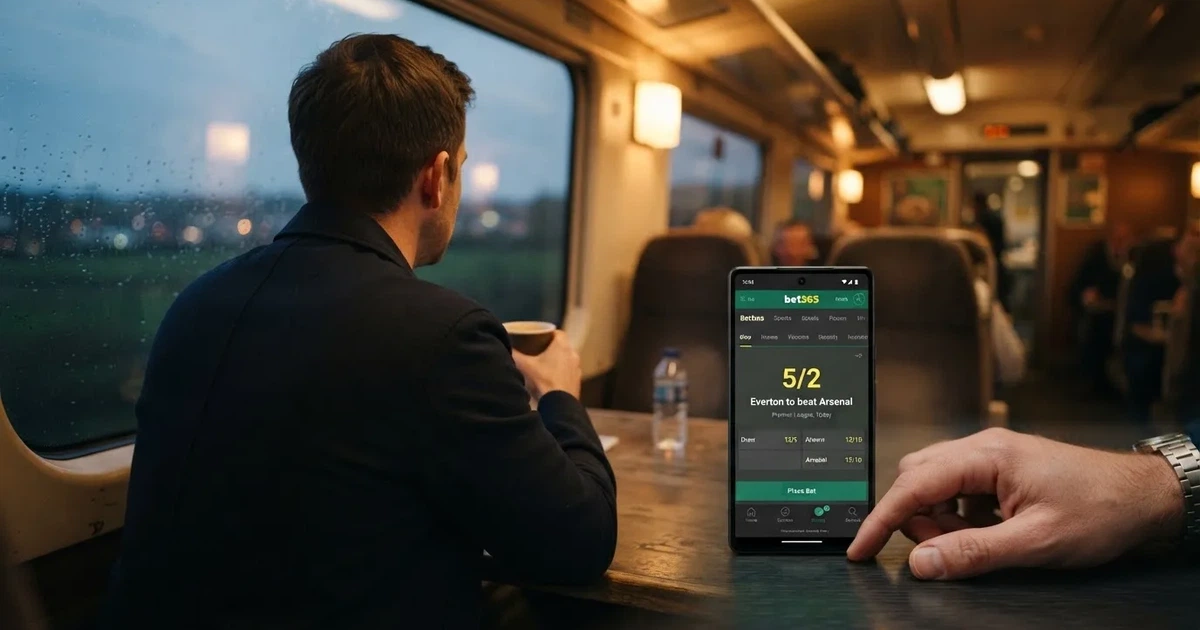
The figures across this page were checked against the Gambling Commission’s public register on October 30, 2026 and the most recent app-store listings on the same day.
The Ten Betting Apps on Test
The order below reflects how the brands differ against four tests a mobile punter cares about: the licence standing on the Commission’s register, the app’s depth on in-play and bet-builder markets, the payment rails and payout speeds it offers, and the welcome offer as the operator’s own terms state it. A summary table sits below the rankings; each operator then gets its own section with a verdict at the foot.

- bet365 — the most-downloaded UK sportsbook app, in-play depth, Face ID, Apple Pay funding.
- William Hill — long-standing high-street name, 24/7 in-app messaging, time reminders and deposit limits.
- Paddy Power — money-back specials on football and racing, broad sport coverage, fixed-odds core.
- Betfair — exchange plus sportsbook in one app, Bet Builder, free live streaming on UK and Irish racing.
- Unibet — has operated since 1999, Player Profile test, BeGambleAware and GamCare hand-offs in-app.
- Spreadex — fixed-odds and financial spread betting under one roof, cash out across both formats.
- BetVictor — around 80 years of bookmaking experience, price boosts and acca offers on selected events.
- QuinnBet — straightforward free-bet terms, seven-day expiry, evens or greater minimum price.
- Dabble — social betting with Copy Bets and Banter Channels, 10p paid when a user is copied.
- Smarkets — exchange-first design with two-factor authentication and live order-book view.
The set is not “the only” licensed apps in the country — the Commission’s register runs into the hundreds — but it covers the established high-street names, the all-in-one sportsbook-and-exchange operators and the smaller indies that have built app-first products around a specific feature. Where a brand’s profile cuts against the subject — for example a brand whose app is light on in-play markets sitting on a page that prizes mobile in-play — that mismatch is named in the operator’s own write-up rather than smoothed over.
Licensing snapshot at a glance
| Brand | Gambling Commission account | Licence holder on the register | The operator’s own statement on the licence |
|---|---|---|---|
| bet365 | Hillside Technology Limited account (17+ App Store age rating, 18+ account-holder rule) | Hillside Technology Limited | UK app published by Hillside Technology Limited; age gate enforced |
| William Hill | WHG (International) Limited trading as William Hill | WHG (International) Limited | Long-standing UK bookmaker; safer-gambling tools and 24/7 messaging |
| Paddy Power | PPB Counterparty Services Limited (account 39439) | PPB Counterparty Services Limited | App published by Paddy Power PLC; covers football, racing, rugby, F1, darts, snooker, tennis, golf, boxing |
| Betfair | PPB Counterparty Services Limited (account alongside Paddy Power) | PPB Counterparty Services Limited | Exchange plus sportsbook; Bet Builder; free streaming on UK and Irish racing and football |
| Unibet | Platinum Gaming Limited, Gibraltar (account 45322) | Platinum Gaming Limited | Has operated since 1999; UK site run by Platinum Gaming Limited |
| Spreadex | Sporting Index Limited for spread; Gambling Commission for fixed-odds | Combined entity | FCA-regulated for spread betting; Gambling Commission for fixed-odds; FCA spread losses can exceed deposit |
| BetVictor | BetVictor Limited | BetVictor Limited | Around 80 years of experience; sportsbook plus casino under one app |
| QuinnBet | QuinnBet (Gibraltar) Limited (account 61011) | QuinnBet (Gibraltar) Limited | Free bets valid seven days from credit; evens (1.5) minimum price; straight accumulators allowed, Trixies, Patents and Yankees excluded |
| Dabble | Dabble Sports UK Ltd (account 65677) | Dabble Sports UK Ltd | Social betting app with Copy Bets and Banter Channels; safer-gambling tools and cooling-off periods |
| Smarkets | Smarkets Limited | Smarkets Limited | Exchange with two-factor authentication, live charts and 24/7 live chat |
The cells above are what each operator and its App Store listing state — the licence number is verifiable on the Commission’s public register against the named holder. The right-hand column is what each operator says about itself, not an endorsement.

What a Licensed Betting App Actually Means in Great Britain
A “licensed betting app” in the United Kingdom is the App Store or Play Store front of an operator whose name appears on the Gambling Commission’s public register against a remote general betting standard (real events) licence — the category that covers pre-match and in-play wagering on real sport. A separate licence category exists for pool betting on horse and dog racing, and a third for betting intermediaries (the exchanges such as Betfair and Smarkets). An app whose domain is .com is no different in law from one on .co.uk; what matters is the licence, not the top-level domain. The test of a licence is the Commission’s register, searchable by trading name, business name, domain or account number, and the app store listing is one signal — not the test.
The Commission’s licence travels with the operator, not the platform. Two of the brands above sit under the same holding company (Paddy Power and Betfair both run on PPB Counterparty Services Limited’s licence), which means a complaint about one is a complaint against the same account on the register. Brands not in this comparison also carry Commission licences — Coral, Ladbrokes, Sky Bet, Betway, Betfred, talkSPORT BET, Prime Slots’ sportsbook arm, and many more — and none of them are less “licensed” by being outside this top ten.
The brand-not-platform point matters because a punt who downloads a “white-label” app sold under a sportsbook’s name but operated by a different licence holder should read the small print of the App Store listing. The publisher name and the licence-holder name should match the Commission’s register.
Verification, age and the first deposit
Every Gambling Commission-licensed app opens the account with a name, address and date-of-birth check, in force since 7 May 2019, and the deposit button does not appear until that check has passed. Age is 18 or over — the App Store age rating on most of these is 17+ because that is Apple’s bracket, but the operator’s own terms put the betting age at 18. The verification applies to free bets and bonuses as well as cash deposits, so “claim a bonus without giving my details” is not a path a licensed app offers.
That single rule is what closes “anonymous betting apps” as a category. Crypto deposits, pseudo-anonymous e-wallets and offshore domains can route around identity checks on sites regulated outside the Commission’s jurisdiction, but no app listed on the Commission’s register can do so — the moment it did, it would lose its licence. The trade-off is concrete: no anonymous play, in exchange for GAMSTOP self-exclusion coverage, the £150 financial-vulnerability check, the 10x bonus wagering cap, and a route to an Alternative Dispute Resolution (ADR) body if a payout is withheld.
The Legal Frame Behind the App
Three statutes do the heavy lifting on the screen a punter sees. The Gambling Act 2005 is the umbrella that creates the licensing regime and the offences for unlicensed supply; the Gambling (Licensing and Advertising) Act 2014 brought remote operators into the regime on a point-of-consumption basis, so a Curaçao or Gibraltar licence is not a substitute for a Commission one when customers are in Great Britain; and the Licence Conditions and Codes of Practice (LCCP) tie the operator’s day-to-day conduct — verification, social responsibility, marketing, financial checks — to the licence itself.
Northern Ireland
Northern Ireland sits outside the 2005 Act and runs on its own older law. A “GB-licensed” or “Great Britain-licensed” operator is licensed for England, Scotland and Wales; for Northern Ireland, the operator needs a separate Certificate of Registration from the local regulator. Several of the apps above accept customers in Northern Ireland under a different licence category, others do not — the operator’s own help pages name the territory they take customers from.
What may and may not be bet on
There is no statutory list of permitted bets or markets. The Commission grants the licence for a category (remote general betting standard, pool betting, betting intermediary and so on) and the operator lists the events under its house rules and the LCCP. In-play betting is allowed under general betting licences, and esports are treated like any other real event for the purposes of betting. Virtual events (computer-simulated fixtures whose outcomes come from a random number generator rather than a real fixture) sit under a separate licence category; the market overlap with real-event betting is partial.
Betting on politics, TV outcomes and novelty markets is offered by GB bookmakers and the inputs turned up no statutory prohibition. Spread betting outside the financial-spread category sits inside General Betting Duty and is licensed by the Commission as betting, not by the FCA as a financial product. Spread betting that counts as a financial contract is regulated by the FCA, and a financial-spread bookmaker holds both regulator approvals — one for the spread side and one for the fixed-odds side.
The marketing rules a punter sees
Two of the marketing rules show up on the punter’s screen. The CAP Code section 16 ban on gambling advertising with strong under-18 appeal, including anyone who is or seems to be under 25 in the ad’s foreground, governs who appears in the advertisement, not who can place a bet. The “whistle-to-whistle” rules — no betting ads on TV from five minutes before a live sporting event starts to five minutes after it ends, before the 9pm watershed — are an industry code, not statute, and exempt horse and greyhound racing.
The wagering cap announced for promotional terms — a 10x turnover maximum on cash bonuses, and a ban on mixed-product offers that require gambling on two or more product types (betting plus casino, for example) for the same bonus — came into force on 19 January 2026 and what you see in the app today is what falls under it. Whether the cap extends to free bets whose stake is not returned is not established in the public rules; what is established is that the bonus itself cannot require more than 10x turnover when it does carry a wagering condition.
Tax
The player pays no tax on betting winnings in Great Britain — a general statement, not tax advice, and a professional gambler is a different question that HMRC or an adviser should answer. The operator pays General Betting Duty out of its gross profits (currently 15% with a new remote rate of 25% from 1 April 2027 on most remote bets; pool, in-person and self-service-betting-side bets stay at 15%); how much of that duty is reflected in the odds a punter sees is not a number anyone publishes. Spread betting has its own rates (3% on financial spreads, 10% on other spreads), and the FCA-regulated part sits outside General Betting Duty.
Offshore and “unlicensed”
An operator whose remote facilities are used in Great Britain needs a Commission licence, wherever it is based. That is the point-of-consumption rule. A Curaçao-licensed app that accepts UK customers without a Commission licence is breaking section 33 of the Gambling Act 2005; the offence is on the operator, not on the punter, but the practical consequences sit on the punter side. Those consequences are not dramatic in the criminal-law sense — they are worse in the consumer sense:
- No GAMSTOP coverage if the punter later wants to self-exclude across the licensed market.
- No Commission complaints route, no ADR body and no British-law remedy if funds are withheld.
- The bonus cap, the £150 vulnerability check and the safer-gambling tools do not apply.
- Enforcement against the unlicensed operator goes through cease-and-desist notices, search-engine referrals and disruption of payment rails; the operator’s site may keep working through it.
The legal framing is “licensed = checks, limits, GAMSTOP, bonus cap, but also verification before the first bet; unlicensed = none of those protections and possible loss of funds.” Neither is the safe choice by default — the licensed side trades anonymity for protection, the unlicensed side trades protection for anonymity. A punter who wants both is not going to find it in the App Store.
Safer Gambling on the App
GAMSTOP is the national multi-operator self-exclusion scheme and a mandatory licence condition for online operators since 31 March 2020. A punter who registers with GAMSTOP for six months, one year or five years (or five years with auto-renewal) is blocked from opening new accounts, depositing or placing bets on any GB-licensed online operator for the period. After the minimum period has passed the exclusion stays in place for a further seven years unless the punter applies to GAMSTOP to remove it, and the seven-year tail catches a lot of people who forgot they registered. GAMSTOP covers online sites and apps; the betting shops run a separate in-shop self-exclusion scheme.
Three other safer-gambling mechanisms shape the day-to-day app experience:
Deposit limits. Every Commission-licensed app offers deposit limits on a fixed time frame — daily, weekly or monthly — under Remote Technical Standard 12. The first changes landed on 31 October 2025; a second phase was postponed to 30 September 2026. The current state: deposit limits exist and are the customer’s to set, the framework is the Commission’s, and the operator must offer the tool but cannot dictate the level.
The £150 financial vulnerability check. Since 28 February 2025, when a customer’s deposits minus withdrawals exceed £150 in a rolling 30 days, the operator runs a public-record check — bankruptcy, county court judgments, similar markers — under LCCP condition 3.4.4. It is not a credit reference check, and it is not an income check. A punter who hits the trigger once will keep hitting it through the rolling window unless withdrawals rise. The point is to catch markers of financial distress, not to second-guess affordability.
Financial risk assessments (“affordability checks”). Announced in a staged plan with no confirmed start date as of the Commission’s July 2026 communications. The trigger thresholds and the data the operator may ask for have not all been set. A page of this kind can say “announced, staged, no start date”; it cannot say the check is in force.
Help services. GamCare runs the National Gambling Helpline; GambleAware funds treatment; the NHS operates gambling clinics across the regions; Gamblers Anonymous runs peer-support meetings. Several of the operator write-ups below name where the help links sit in their app.
A practical consequence of the safer-gambling suite: the same app that says “place a bet in three taps” is also the app that prompts a deposit-limit review, runs the vulnerability check and gates the first deposit behind an identity check. The trade is real.
Crypto, Anonymity and the App
An anonymous betting app in the United Kingdom does not exist on a Commission licence. The 7 May 2019 verification rules mean a name, an address and a date of birth are checked before the first deposit, and a bonus or free bet is not exempt. A GB-licensed app that took a Bitcoin deposit and credited a balance against a wallet address with no name check would be operating against the licence and losing it.
Crypto on the bookmaker side lives in three places, none of them on the licensed-app side. Offshore apps licensed in Curaçao, Costa Rica or Anjouan sometimes take Bitcoin, Ethereum, USDT and a handful of altcoins, and they pitch themselves on speed and “no verification” at the deposit stage. Some peer-to-peer exchanges and prediction markets run on USDC rails and self-custody wallets, again outside the Commission’s reach. A third route is a GB-licensed operator that adds a payment-method option drawing funds from a crypto exchange account — pounds still, the app still in pounds, but the funding source is an on-chain swap the punter has done outside the app.
None of these are “the best crypto betting apps in Great Britain” in the sense a UK-resident, Commission-protected punter can use today. The licensed-app choice on the table is:
- E-wallets (PayPal, Skrill, Neteller, Apple Pay, Google Pay) for fast deposits and withdrawals, all of them linked back to a verified bank account or card in the customer’s name.
- Bank transfers and FPS for large-value withdrawals.
- Prepaid cards (Paysafecard and its peers) for deposit-only — withdrawals usually revert to bank.
- Direct debit on debit card (credit cards banned for gambling since 14 April 2020 across Great Britain).
The anonymity question is the wrong question to take to the licensed market — the honest framing is that licensed apps identify you, in exchange for the protections that flow from being identified. The crypto-on-the-app pitch is an offshore pitch.
Bonuses and Free Bets on the App
The bookmaker’s welcome offer is the marketing word punters meet first. Three things sit behind it on a Commission-licensed app: the 10x wagering cap that came in on 19 January 2026, the ban on mixed-product offers (a bonus that requires gambling on betting AND casino, for example), and the operator’s own expiry and minimum-price rules. The headline numbers below are what each operator’s terms state; the conditional language — “seven days”, “evens (2.0) or greater”, “straight accumulators only” — is what determines whether the bonus is worth claiming.
Two mechanics show up across most of these offers:
Free bets. A token of fixed value that the punter stakes on a market and that pays out the winnings only — the original stake is not returned. A £10 free bet at odds of 4.00 (3/1) returns £40 if it wins, of which the £10 stake is “absorbed” into the offer; the punter walks away with £30, not £40. Bonus bets are the same shape with a different name.
Cash bonuses. A matched amount of cash that the punter uses as a stake on a market and that pays out both stake and winnings, but that carries a wagering condition — “wager £500 before withdrawal” — capped at 10x the bonus value for cash bonuses under the current rules. A £10 cash bonus at 10x needs £100 of qualifying bets before the bonus and any winnings are withdrawable.
Three other terms shape how heavy the offer is in practice:
Minimum price. “Bet at odds of 1/2 (1.5) or greater” means a single at 1/2 (1.5) counts but a single at 4/11 (1.36) does not. QuinnBet’s free-bet terms are this rule stated plainly: the bet has to be at 1/2 (1.5) or above, accumulators of straight singles are fine, Trixies, Patents and Yankees are not.
Expiry. QuinnBet’s free bets last seven days from credit, which is short against a market that doesn’t have a clear fixture for several days. A punter who receives a free bet on Monday and wants to use it on Saturday’s racing has to find a market by Friday or lose the stake.
Maximum odds. QuinnBet caps free bets at 50/1 (51.00). That ceiling is not standard across operators — some don’t set a maximum, some cap at 25/1 (26.00), some cap at 100/1 (101.00).
The headline number on a welcome offer is the worst thing to read first because it is what the operator’s terms lead with. The right read is value-times-minimum-price-times-expiry — what the offer produces after the conditions have been respected. A £15 free bet with a three-day expiry at a one-market-only minimum is not bigger than a £10 free bet that holds for seven days and works on any market.
A live bonus numbers table below is not on this page — the rules’ variability across operators is wide enough that a one-figure-per-row table would mislead. The operator write-ups that follow name each offer as the operator’s own terms state it.
Payments and Payout Speed
A Commission-licensed app supports the same six rails on a debit-card-or-bank-account basis, with operator-by-operator variation in which e-wallets are added. The operator-set choices — PayPal on some, Skrill on others, Apple Pay and Google Pay on most — decide what the punter can fund from and, more importantly, where the withdrawal lands.
Debit cards. The workhorse. Visa Debit and Mastercard debit work on every licensed app; withdrawals go back to the same card, usually within one to three working days after an internal approval window. Credit cards are banned for gambling across Great Britain, including credit-card-funded e-wallet deposits.
Bank transfer and Faster Payments. The largest-value route. Deposits clear in minutes for Faster Payments, withdrawals land on the same day for values that don’t trigger enhanced due diligence (EDD). The trigger is operator-set; £2,000 is a typical threshold below which EDD doesn’t fire.
PayPal. The familiar e-wallet, instant deposit, instant-to-24-hour withdrawal once approved. PayPal’s own policy is the gating factor — a withdrawal into a PayPal account that has not received the deposit from the same bookmaker may need a PayPal-side review before release. Most of the apps in the “The Ten Betting Apps on Test” section list PayPal as a deposit rail; not all of them list it as a withdrawal rail.
Apple Pay and Google Pay. The biometric-login e-wallets. Apple’s terms allow Apple Pay-funded deposits for gambling where the funding card is a debit card, and the receipt is from the linked card, not the Apple Pay wallet. Face ID sign-in is an Apple Pay feature a few of the apps pick up: bet365 supports Face ID login on supported devices, NetBet supports it, Fafabet supports it. Google Pay covers the same on Android.
Skrill and Neteller. Useful for punters who use an e-wallet as a buffer between the bookmaker and the bank. Some operators exclude Skrill and Neteller deposits from bonus eligibility — the term to read before claiming.
Paysafecard and prepaid cards. Deposit-only for most operators, with withdrawals reverting to bank. Paysafacard’s 16-digit PIN is what gets fed into the bookmaker’s cashier.
A read of the withdrawal-side promise on the App Store listings turns up two patterns worth flagging:
| Payment rail | Deposit speed | Withdrawal speed the operator names | Where the catches are |
|---|---|---|---|
| Debit card (Visa/Mastercard) | Instant | 1–3 working days | First withdrawal can take longer pending verification |
| Bank transfer / Faster Payments | Same day | Same day to 24 hours | EDD checks at higher values can extend the window |
| PayPal | Instant | Within 24 hours | PayPal-side review can hold it; not every operator withdraws to PayPal |
| Apple Pay / Google Pay | Instant | Falls through to the linked card | Withdrawals revert to the funding card or bank |
| Skrill / Neteller | Instant | Within 24 hours | Excluded from bonus eligibility on most operators |
| Paysafacard / prepaid | Instant | n/a | Withdrawals revert to bank by default |
The cells above are a summary of what the operators’ help pages and App Store listings say. None of the rows come from one source — each row reads as “instant” where one rail can be instant and “1–3 working days” where another needs the clearance window.
The phrase “instant withdrawal” lives next to “withdrawal pending” in the same app menus, and the difference is whether the operator has cleared the payout internally. A “pending” period before the rail kicks in is operator-set and is the area most often where payouts slow. Paddy Power’s Paddy Power Sports Betting app, Betfair Sportsbook, Sky Bet and Betvictor publish a pending-window figure on their help pages, and the figures drift with the deposit-and-withdrawal pattern.
Mobile and App Specifics
A licensed UK betting app is the same brand’s website wrapped in a native shell, with three differences worth surfacing: it uses the handset’s biometrics to log in, it stays logged in across short pauses (so the slip is not killed by a screen lock), and it gets the operator’s mobile-only price boosts and push notifications first.
The biometric login is the most visible mobile difference. Face ID on iPhone (and Touch ID on older iPhones) and the equivalent on Android let the punter open the app with a glance; bet365 supports Face ID on supported devices, NetBet supports Face ID or Touch ID, Fafabet supports Face ID or Touch ID, and the others use a password or PIN cached on the handset. The cache is the security trade-off — once the biometrics are set up, anyone who unlocks the phone and knows which app to open can place a bet.
Two of the mobile-only features appear consistently across these apps:
Push notifications for price boosts. Bet Boost, Price Boost, Enhanced Odds — the names change but the mechanic is the same: a market whose price has been raised for app customers for a limited period. Paddy Power’s money-back specials (one of its signature offers) live mostly in the app. BetVictor offers regular price boosts and acca offers on selected events as part of its app menu. The marketing pitch is “app-only”, which on a betting app means the boost is one tap from “place bet” for someone who has the app open — and an invisible line in the website version for someone who doesn’t.
Native live-streaming integration. Watching an event in the same app that handles the bet is the platform-feature the live betting page is built around. Betfair streams UK and Irish horse racing and football in the app for funded accounts. Spreadex streams UK and Irish horse racing, greyhounds, tennis, NFL and selected football through its app. The streams are gated behind a funded-account or a recent-bet condition, not a separate subscription.
A third class of mobile feature is operator-specific:
- Bet Builder / same-game multi. A market on multiple outcomes from one fixture (match result, both teams to score, total goals, first scorer), priced by the bookmaker as a single bet. Spreadex runs Bet Builder across both fixed-odds and spreads. Betfair runs Bet Builder and an exchange variant. Midnite runs an acca builder.
- One-click bet placement. A pre-set stake that goes on with a single tap, configurable in the account settings. Spreadex names it explicitly on its App Store listing; the others have an equivalent tied to the cash-out button.
- Cash out. Closing a bet before settlement, at a price the bookmaker quotes. Spreadex runs one-click, auto and partial cash out across both fixed-odds and spreads. The partial-cash-out variant lets the punter close part of the stake and leave the rest running.
What the app is NOT, in spite of the marketing:
- A way to avoid identity verification. The verification runs at the account level, not the device level.
- A way to avoid the £150 financial-vulnerability check. The check runs on deposits minus withdrawals, not on the device.
- A way to avoid the GAMSTOP self-exclusion. GAMSTOP applies to online operators regardless of app or website.
- A way to withdraw a bonus without the wagering or expiry rules the operator publishes. The app enforces them.
The mobile conclusion: the app is a faster, more location-aware version of the same product, with the same licence and the same safer-gambling gates. It is not a different product from the website.
Closer Looks at the Ten Apps
The ten write-ups below take each operator on its own terms. Where the page’s subject cuts against an operator — for example a social-betting app whose USP does not include a deep in-play menu — the mismatch is named at the foot of the write-up as one line the punter can read in five seconds. The verdicts close on what the operator’s facts actually establish, not on a suitability claim that the spec block did not earn.
bet365
The most-downloaded UK sportsbook app on Apple’s UK App Store, with Hillside Technology Limited as the publisher and a 17+ age rating on the listing; account-holders have to be 18 to bet. The app is the official global betting partner of the UEFA Champions League, runs in-play across a depth of markets that few of its rivals match, and holds free live-streaming rights on a long list of football and tennis fixtures (a funded account or a recent bet unlocks the stream).
The funding options cover debit card, PayPal, Apple Pay and Google Pay, and the Face ID login runs on supported iPhones. The safer-gambling tools — deposit limits, time-outs, self-exclusion through GAMSTOP, a reality-check reminder that prompts after a configurable session length — are inside the account settings. The “Edit Bet” feature (a function that lets the punter add, swap or remove selections on a settled open bet) is one of the platform’s signature mechanics.
What bet365’s own App Store listing does not state: the welcome offer at the moment of download. The operator refreshes it, and the current shape is what the in-app promo page shows — a £30 or £20 in free bets at the time of writing, gated behind the £10 qualifying bet at 1/2 (1.5) or greater that the rest of the market has settled on.
Verdict. bet365 is the right app for a punt who wants the live-betting depth and the streamed-fixture coverage in one place, who is happy to fund through the big rails (debit, PayPal, Apple Pay) and who uses Face ID as a deliberate control on top of a password. It is not a one-tap “small-stake casual” app — the volume of markets in-play can crowd the slip on a busy Saturday.
William Hill
A name that has been on UK high streets for decades and that runs its mobile app alongside the same brand. The app’s 24/7 in-app messaging customer support is the spec that sets it apart from the rest of the high-street group — late-evening slip questions and weekend market disputes get a chat reply rather than a ticket. The safer-gambling tools include time reminders, time-outs and deposit limits under the customer’s control.
The welcome offer varies with the season — a free-bet cluster on a Premier League weekend, a money-back special on a racing feature. The app shows the current shape on the in-app promo banner and the qualifying-bet rule (evens-or-greater, T&Cs apply) follows the rest of the market’s pattern.
What the spec listing does not name: the depth of in-play markets, the bet-builder coverage or the live-streaming rights. William Hill’s app is a full-feature sportsbook on those dimensions, but the operator’s own App Store blurb reads conservative — none of the functions above is the lead bullet.
Verdict. William Hill is the right app for a punter who already uses the high-street brand and wants the same account on the phone, and for the late-evening support window. It is not the right first download for someone who has not used the brand before — there is no feature in the app that the others do not also offer.
Paddy Power
Paddy Power Sports Betting on the App Store lists Paddy Power PLC as the publisher, the sports it covers as football, horse racing, boxing, rugby, tennis, golf, darts, snooker and F1, and the brand identity as the one that runs the headline-grabbing money-back specials (“money back if your team goes 2-0 up and loses” being the signature mechanic). The licence is held by PPB Counterparty Services Limited, Commission account 39439.
The in-play coverage is broad, the bet builder sits inside the football and racing menus, and the price-boost rotation is among the most active of any of the apps above. The cashier runs on debit card, Apple Pay, PayPal and bank transfer, with withdrawals to the same rails subject to a pending window the help page names.
What the listing does not surface: the joint-licence point. Paddy Power’s Commission licence sits on the same PPB Counterparty Services Limited account as Betfair. A punter who holds both brands’ apps is holding two skins of one licence. The implication is small (a complaint or an EDD trigger affects both), but the punter has to be told — the brand name on the App Store is not the legal entity.
Verdict. Paddy Power is the right app for a punter who likes the money-back specials and the price-boost rotation on the major football and racing meetings, and who is happy with a debit-card or PayPal funding model. It is not the right primary app for someone whose main use is in-play on smaller leagues — the depth is there but the menu gets fiddly.
Betfair
The exchange plus sportsbook in one app. Betfair’s Sportbook side runs in-play, Bet Builder and free live streaming of UK and Irish horse racing and football within the same shell as the exchange, and a 90 Minute Payout market that settles a football bet at the 90-minute whistle regardless of extra time. The publisher and the licence holder are PPB Counterparty Services Limited — the same as Paddy Power.
The exchange is the feature that sets Betfair apart on this list. Back and lay, the order-book view, the ability to trade a position out — none of the others match it. The trade-out cost comes in the form of the exchange commission (a percentage of net winnings on each market, currently 5% on the basic tier with lower rates for high-volume punters), and the punter paying commission on every winning exchange bet is a recurring cost that the fixed-odds sportsbook side does not charge.
The 90 Minute Payout market and the Bet Builder are pitched as the function signature; the live streaming is the everyday utility. The safer-gambling framework is the same as Paddy Power’s, the verification is the same, and GAMSTOP covers both.
Verdict. Betfair is the right app for a punter who already trades on the exchange and wants the sportsbook side and the streaming in the same shell. It is not the right first app for someone new to betting — the exchange layout adds cognitive load a fixed-odds customer does not need, and the 5% commission on winning exchange bets is a real cost.
Unibet
Unibet runs the UK site through Platinum Gaming Limited in Gibraltar, Commission account 45322, and the brand’s “since 1999” longevity claim is the marketing anchor. The safer-gambling suite is the brand’s clearest functional line: a deposit-limit tool, a Player Profile test, product restrictions and self-exclusion, with live-chat support and a footer full of BeGambleAware, GamCare, GAMSTOP, Gambling Therapy and BGC links.
The sportsbook covers the major UK and European sports at depth, with a bet-builder menu and a price-boost rotation; the casino runs alongside it under the same account. The app streams a selection of live events to funded accounts and runs in-play across the standard football menu. The cashier lists debit card, bank transfer, Apple Pay and PayPal as the typical rails.
What the listing does not state: the welcome offer shape. Unibet’s in-app promo page shows it, with the usual £10-at-evens qualifying bet and a free-bet cluster as the headline structure.
Verdict. Unibet is the right app for a punter who wants a long-standing brand with a strong safer-gambling suite in-app, and who is happy with a debit-card, PayPal or Apple Pay cashier. It is not the right app for a punt who wants the deepest price-boost rotation or the broadest live-streaming library — the brand ranks in the middle of the ten on both of those.
Spreadex
The only name on this list that holds a Financial Conduct Authority (FCA) licence for spread betting alongside the Commission’s fixed-odds licence. The point is not regulatory trivia — it is that spread-betting losses can exceed the deposit, which is the FCA’s own warning on Spreadex’s homepage, and the punter should know the shape before claiming the welcome cluster.
The app combines fixed-odds and spread betting in one shell, with one-click, auto and partial cash out, Bet Builder across fixed odds OR spreads, and live streaming of UK and Irish horse racing, greyhounds, tennis, NFL and selected football. The funding rails are the standard Commission set: debit card, bank transfer, e-wallets where supported.
The match-losses-can-exceed-deposit line is the headline risk. A losing fixed-odds bet cannot lose more than the stake; a losing spread bet can lose more than the deposit in some market directions. The Spreadex app does not remove the risk on the spread side — it puts both products on one screen and leaves the difference to the customer to read.
Verdict. Spreadex is the right app for a punter who wants fixed-odds and spread on one screen, and who reads the FCA’s “losses can exceed deposit” warning on the homepage before staking on the spread side. It is not the right app for a punter who only wants fixed-odds — the spread menus crowd the slip with markets the customer does not need.
BetVictor
About 80 years of bookmaking experience on the brand pitch, with a sportsbook-plus-casino app (roulette, blackjack, live casino, Mega Moolah jackpots inside the casino tab). Regular price boosts, acca offers and free bets on selected events are the spec the listing leads with; the welcome offer sits in the app and is governed by the operator’s customer terms and conditions.
The in-play coverage runs the major UK and European sports at depth; the bet builder sits inside the football menu; the live-streaming library is funded-account-gated. The cashier lists debit card, bank transfer and a mixed set of e-wallets (PayPal on some markets, Skrill on others).
What the listing does not state: the exact current shape of the welcome offer, the min-price rule, or the wagering turnover. The in-app promo page is the canonical source on the day the punter downloads.
Verdict. BetVictor is the right app for a punter who wants a long-standing bookmaker, a strong price-boost and acca-offer rotation, and a casino tab in the same shell. It is not the right first app for someone whose priority is live streaming — the streaming library is competitive but not the deepest.
QuinnBet
A focused free-bet offer with terms the operator states plainly: free bets are valid for seven days from credit, the minimum price for a market is 1/2 (1.5), the maximum odds are 50/1 (51.00), straight accumulators are allowed but Trixies, Patents and Yankees are not. QuinnBet is licensed by the Commission through QuinnBet (Gibraltar) Limited, Commission account 61011.
The sportsbook covers UK and Irish racing at depth, football across the major leagues, and a smaller-market blend (golf, tennis, darts) that doesn’t try to compete with the high-street leaders on volume. The app’s headline offer is the £/€/£-10-cluster free bet; the marketing leans on the simpler, plainer terms than the operators whose welcome is a ten-stage funnel.
What the seven-day expiry means in practice is the part a punter should hold. A free bet credited on a quiet Monday with no racing until Saturday has to find a market by Sunday or be lost; the 1/2 minimum price cuts out the favourite-only staking pattern that some punters use on free-bet offers.
Verdict. QuinnBet is the right app for a punt who reads the free-bet terms and plans a market inside the seven-day window, and who values the acca-friendly stake rules. It is not the right primary app on a deposit-by-deposit basis — the welcome offer is the strongest reason to download it.
Dabble
A social betting app with a real-time feed, Copy Bets, group chats and Banter Channels at the centre of the design. Dabble Sports UK Ltd is the licence holder, Commission account 65677, and the marketing angle is “follow other punters’ bets in real time” rather than “scan the deepest market list”. Dabble pays 10p every time another user copies a punt’s bet, which is the social-betting mechanic that sets it apart.
The safer-gambling tools include deposit limits and cooling-off periods, with resources in the app and on the helpdesk — the framing is “community first” but the licensed-operator obligations still run underneath. The cashier lists debit card and bank transfer; the sports coverage runs football, racing and the major US leagues at a smaller volume than the high-street leaders.
Where the spec cuts against the app: Dabble is not a deep in-play menu, a strong live-streaming library or a heavy price-boost rotation. The shape of the offer is the social feed, the Copy Bets mechanic and the Banter Channels.
Verdict. Dabble is the right app for a punt who likes the social-feed mechanics and is happy with a smaller-market list. It is not the right app for someone whose primary use is in-play or live streaming on minor leagues.
Smarkets
A betting exchange with a mobile-first design — two-factor authentication, live charts, an order-book view, a quick trade-out option and 24/7 live chat support. The cashier lists debit card, bank transfer, Neteller and Skrill among the routes, with Neteller and Skrill deposits sometimes excluded from bonus eligibility on the operator’s T&Cs.
The exchange-only design is the feature that sets Smarkets apart from a Betfair-style exchange-plus-sportsbook offer. There is no sportsbook side, no price-boost rotation, no Bet Builder; what there is, is a clean order-book view and a back-and-lay market. The commission on winning exchange bets is 2% on the basic tier (vs. Betfair’s 5%), which is the spec a punt who trades frequently should hold onto.
What the spec cuts against: a punt who wants one app for both fixed-odds and exchange has to hold Smarkets and another sportsbook on top of it; a punt who only wants fixed-odds has no use for the order book or the trade-out mechanic.
Verdict. Smarkets is the right app for a frequent exchange user who wants a lower commission than Betfair’s basic tier and a clean mobile interface. It is not the right first app for a punt who only wants fixed-odds.
How the Apps Sit on the Commission’s Register
A licence on the public register is not a recommendation and not an endorsement — it is the legal threshold. The register entry for every brand above lists the trading name, the licence holder, the address and the licence categories on the same page; a punter can search by business name, trading name, domain or account number. The point of the check is twofold: to confirm the brand in front of you is the brand on the register (catch the typo-squatted domain and the white-label reskin); and to see whether the licence covers what the app is selling (a remote general betting standard licence covers sports betting, but pool betting, virtual events and betting intermediary each need a separate category).
Two traps the register check exposes:
- A white-label app whose App Store publisher name is not the licence-holder name.
- A brand running two licence holders (a GB one and a non-GB one) on the same domain, where the customer is on the non-GB side and the GB licence is dormant.
The Commission’s online register is updated within days of a licence change, and the search filter “Active” is the right default. A brand that has held a Commission licence and has it revoked or surrendered shows up in the register with the date of the action — what the punter sees today is the right starting point, but a check at the moment of deposit is also defensible.
Reading an App’s Welcome Offer
Three lines to read on every welcome offer:
- The qualifying bet. Stake, minimum odds, market types allowed or excluded, settlement rules (a void leg usually does not qualify), time window (the bet has to be placed within seven days of registration, often shorter). A qualifying bet at minimum odds of 1/2 (1.5) at a £10 stake is the dominant shape across the operators above.
- The bonus receipt. Free bet value, number of free bets, expiry per free bet (QuinnBet’s seven-day figure is short; others run three, seven, fourteen or thirty days).
- The settlement rules. Maximum odds on the free bet (QuinnBet’s 50/1 / 51.00 ceiling), minimum odds (QuinnBet’s 1/2 / 1.5 floor), excluded bet types (Trixies, Patents, Yankees excluded on QuinnBet; some operators exclude other multiples), payment method exclusions (Skrill and Neteller deposits often excluded from bonus eligibility), the wagering multiple if a cash bonus is involved (10x cap on cash bonuses, capped at £100 turnover under the current rules on a £10 bonus).
The two numbers that always get quoted in the marketing — “£X free bets” and “100% bonus” — are the ones that tell the punter the least. A punter who reads the three lines above knows whether the offer is worth the qualifying-bet risk, the time-window cost and the value of the stake they would have placed anyway.
Money In, Money Out
The funnelling of funds through a betting app has three stages: deposit, the bet, and withdrawal. The first and last are where the rails matter most. The bet itself is a balance adjustment in the app’s ledger; the rail time affects how fast the win hits the bank account rather than the app.
A few practical rules:
- First withdrawal is the slowest. The first withdrawal triggers the operator’s source-of-funds review and the payout goes through after a 24-to-72-hour check. Subsequent withdrawals on the same rail are faster.
- Different rails carry different costs. A PayPal withdrawal on Paddy Power is “within 24 hours” subject to PayPal’s own review. A bank-transfer withdrawal on Betfair is “within 24 hours” subject to Faster Payments uptime. A debit-card withdrawal on the same Betfair is 1-3 working days because the rail is slower than FPS.
- Bonus clearing changes the rail choice. Skrill and Neteller deposits are often excluded from bonus eligibility, so a punter claiming the welcome offer needs to deposit through debit card, bank transfer or PayPal.
- Winnings above the EDD trigger can hold up a payout. A punt who lands a four-figure winner from a free bet may face a source-of-funds check on the way out that the small-stake punter never sees.
- The pending window is the operator’s choice. “Pending” can mean anything from “the bet has settled and the funds are moving” to “we are still reviewing the slip”. The operator’s help page is the only place the figure lives.
A punter who has three apps installed (one high-street brand, one exchange, one social) has three distinct cashier experiences, three EDD thresholds and three different pending windows. The audit of those three is on the operator’s help page, not on this page’s table.
Operating Companies and Licence Holders
A licence holder is the legal entity that is on the Commission’s register against a named account number. The brand name on the App Store is the trading name; the publisher name on the App Store can be the same or a related company; the licence holder is a third entity on the register. The three do not always coincide.
The licence holders on this page, named below in the order the page uses them, are:
- Hillside Technology Limited for bet365.
- WHG (International) Limited for William Hill.
- PPB Counterparty Services Limited for Paddy Power and Betfair jointly.
- Platinum Gaming Limited (Gibraltar) for Unibet.
- Sporting Index Limited and a related entity for Spreadex’s fixed-odds and spread sides.
- BetVictor Limited for BetVictor.
- QuinnBet (Gibraltar) Limited for QuinnBet.
- Dabble Sports UK Ltd for Dabble.
- Smarkets Limited for Smarkets.
Two follow-on points for a punter:
- Where the licence holder sits is a tax-jurisdiction note, not a regulatory one. Gibraltar-based holders running UK-licensed operations is the standard shape, and the Commission’s licence travels across jurisdictions.
- Two brands sharing a licence holder (Paddy Power and Betfair on PPB Counterparty Services Limited’s account) means the regulatory consequences sit at the holding level, not the brand level.
Market Margins and Why Prices Differ
Every bookmaker price carries a margin — the percentage of every pound staked that the bookmaker keeps on average across a market. The 1/2-and-1.5-floor odds on a free bet and the deeper prices on a Premier League Saturday are different shapes of margin; the difference between the two is the reason a punt shop and an app do not produce identical returns.
The mechanics of the margin sit behind the prices a punt sees. A football match with three outcomes (home, draw, away) at decimal odds of 2.10, 3.40 and 3.50 has a margin of 5.5% — a small margin that reflects the volume of money on a popular fixture. A non-league fixture priced at 4.50, 5.00 and 7.00 has a margin closer to 10%, because the bookmaker has to take more risk on a market with less liquidity. Prices on smaller markets are worse for the punter because the margin has to be wider for the bookmaker to make a return at lower volume.
The same logic applies to horse racing: the race-market margin on a competitive handicap with 12 runners is closer to 15-20%, depending on the operator and the betting pattern. The margin inside the price is what decides whether a punt on the favourite is actually a value bet, and reading prices without reading margins is one of the more common errors a casual customer makes.
The bookmaker’s app does not surface the margin explicitly. The numbers appear in the “margin” or “overround” calculators that the major odds-tracking services run, and the daily figures on a Premier League fixture are public on those services within minutes of the price being posted. A punter who wants to pick the operator with the lowest margin on a fixture has the tool — what they often don’t have is the time to run the comparison for every market.
What the Bookmaker’s “Best Odds” Claim Means
“Best odds guaranteed” (BOG) is the British horse-racing term that means the bookmaker pays out at the starting price (SP) if the SP is higher than the price the customer took. The mechanic is a UK-and-Ireland racing convention more than a regulatory one — most GB-licensed apps offer it on UK and Irish racing as standard, and the punter who backs a horse at 5/1 (6.00) and sees the SP come in at 7/1 (8.00) is paid at 8.00, not 6.00.
The bookmaker’s “best odds” claim is not a best-price-across-the-market guarantee. Two bookmakers at 5/1 (6.00) and 6/1 (7.00) on the same horse is a real difference; both can correctly advertise BOG on their own terms. The punter’s read is the price being offered, not the marketing word.
Where the claim is more substantive is on a price boost. A “best odds” boost that takes a horse from 5/1 (6.00) to 7/1 (8.00) for a limited period is a specific price on a specific market for a specific time window — the boost is what the offer names, not the SP. If the SP comes in at 9/1 (10.00), the BOG applies; if the SP comes in at 6/1 (7.00), the punter walks away with the boosted 8.00.
Final Word
A licensed UK betting app is the same regulatory regime as the desktop site, wrapped in a faster interface with a biometric login, push notifications and the operator’s app-only price-boost rotation. The licence on the register is the legal threshold; the app is the surface the punter touches. Ten apps have been walked through here, from the most-downloaded (bet365) to the exchange-only (Smarkets), and what runs underneath them is the same Commission’s register, the same verification, the same GAMSTOP coverage and the same safer-gambling framework. The differences between them are the depth of in-play markets, the size of the live-streaming library, the welcome offer and the commission cost on the exchange side — all of them visible in the App Store listing, all of them worth checking at the moment of download rather than at the moment of the first bet.
Frequently Asked Questions
Which apps are best for esports betting?
Esports betting is treated like any other real-event betting on a Gambling Commission-licensed app, so the test is the depth of the operator’s esports menu rather than the app itself. The operators above that name esports explicitly in their listings (such as Betmaster covering League of Legends and Dota 2) are the starting point. Always confirm the operator’s market list inside the app, because the depth varies by event and by season.
Is a mobile app the best way to bet online?
For most regular punters, yes — the app is faster, supports biometric login, integrates live streaming in the same shell and gets mobile-only price boosts first. The website version carries the same licence and the same markets, so the choice is about speed and convenience rather than a different product.
What are the best apps for mobile sports betting?
The ten apps on this page are a fair cross-section: the high-street brands with deep in-play menus (bet365, William Hill, Paddy Power, Betfair), the social-betting design (Dabble), the exchange side (Betfair, Smarkets), the spread side (Spreadex), the long-established bookmaker (BetVictor), the simpler free-bet terms (QuinnBet) and the safer-gambling suite (Unibet). The right choice depends on whether the punter’s priority is in-play depth, live streaming, exchange trading, social features or welcome-offer terms.
How can a bookmaker’s Gambling Commission licence be checked?
The Commission’s public register is searchable by business name, trading name, domain or account number, and is the whole test of who holds a licence. Search for the operator’s account number, confirm the licence holder matches the brand’s publisher name on the App Store listing, and check the licence categories cover the markets the app offers. This page’s licence-number column is the starting point.
How is the return on a bet worked out from the stake and the odds?
For a single bet at decimal odds, a winning bet returns the stake multiplied by the odds. A £10 single at 4.00 returns £40, of which £30 is profit. For an accumulator, the odds multiply across the legs and the return is the stake multiplied by the combined odds — a £5 treble at 2.00, 3.00 and 4.00 (combined odds 24.00) returns £120, of which £115 is profit.
Payments & apps – Motorracingtips.com
Content created by the «Motorracingtips.com» team
