Cricket betting odds in Great Britain: formats, margin and what licensed bookmakers offer
 Available in US
Last verified: October 30, 2026 · Spreadex homepage and ten Gambling Commission remote licence cards on the Commission’s public register
Cricket is a sport of overs and sessions, of collapses and partnerships that turn on a single delivery — and the odds on it are built the same way every other price on a licensed bookmaker’s site is built: a margin baked in, a payout share left for a who-remains, and a settlement rule that says what happens when the rain comes. This page is a working guide to those odds: the formats they appear in, what they pay on a winning stake, how the bookmaker’s cut sits inside the price, and which licensed bookmakers serve customers in Great Britain under a Gambling Commission licence and what each of them brings to cricket specifically. The picture is a 2026 market, ten operators on a Gambling Commission remote licence, and one set of rules every one of them works under.
Cricket betting offers and what they actually cost
“Free bet” sits at the front of almost every welcome promotion on the page, and it is worth reading what those words mean in the terms. A free bet is a credit paid back as winnings only — the stake is not returned with a winning free bet. A £10 free bet at odds of 3.00 pays £20 if it wins, not £30. That single line is the difference between the headline and the pocket, and it appears in the small print on most of the offers a customer meets on a licensed UK bookmaker’s app.
BetMGM’s sports welcome offer, as the App Store listing states, gives new UK customers who deposit £10 or more and place a sports bet within 7 days four £10 free bets — two football accumulators of 4+ selections and two sports multiples of 2+ — valid for 7 days with minimum odds and opt-in required. The credit is split, the expiry is short, and the bettor has to land a multi to use two of the four. BoyleSports’ sports welcome offer is £20 in free bets when a £10 bet is placed, with a separate €30 in free bets for a €10 bet for Irish players. Octobet’s sportsbook welcome offer is 50% back as a free bet up to £50, plus a £10 casino bonus for new customers — a cash-back-as-free-bet shape, not a £-for-£ match. Dabble’s welcome offer is “Bet £10, Get £10 in Free Bets” on a first deposit for new customers, with minimum odds applying, a 7-day free bet expiry and the stake not returned.
Sky Bet free bets are staked only on single or each-way markets, not multiples, and cannot be used on virtuals. They expire 30 days after crediting, are non-withdrawable, and the stake is not returned with winnings. That is a tighter restriction than most — no accumulators, no virtuals, and the 30-day window is the longest of the bunch. Fitzwilliam Sports describes its welcome as a “High Stakes Welcome” subject to compliance criteria; the site is a Dublin bookmaker with capped membership, so the bar to enter sits higher than at an open-to-all UK operator.
Under the Gambling Commission’s promotion rules in force since 19 January 2026, wagering requirements on bonuses are capped at 10x — a £10 bonus with a 50x requirement means £500 of bets; under the cap no more than £100. The same rules ban mixed-product promotions that require gambling on two or more product types in one offer. That cap is what gives the rest of the small print its shape, because no licensed bookmaker can ask more of a customer than a 10x turn on the bonus amount. Every welcome offer on the page works inside it.
Cricket betting apps on the App Store
The Apple App Store is where most customers meet a bookmaker first, and the ranking, age-rating and feature list on the listing are the read of what the operator ships. bet365’s listing describes the app as the most downloaded sports betting app in the UK and ties the brand to its role as the official global betting partner of the UEFA Champions League. The cricket product sits inside an app that holds Best Odds Guaranteed on horse racing, Bet Builder features that combine markets from one event into a single bet, Super Boosts, Winnings Boosts on Bet Builders and selected singles, and daily Bet Boosts. That is a wide feature set, and cricket takes its share of the price-boost surface alongside football.
QuinnBet’s app listing carries Best Odds Guaranteed on Irish and UK horse racing bets from 10:00am daily on singles, multiples and system bets, with a maximum benefit of £150 per customer per race. Cricket does not get its own Best Odds Guaranteed from QuinnBet — the offer is horse-racing only — so the price-boost surface there is football and racing, not the cricket markets. Bet600’s App Store listing sets out Best Odds Guaranteed on horse racing: if the starting price is bigger than the early or show price taken, the bet is paid at the SP. Same shape: a horse-racing concession, not a cricket one.
BoyleSports, BetMGM, Octobet and Dabble each publish their app with the standard feature list — sports markets, casino tab, free-bet wallet — and the cricket product sits inside the sportsbook alongside football, racing and tennis. Kwiff’s app has a 17+ age rating and is operated under a UK Gambling Commission licence by Spryme Ltd. Lottoland UK’s app combines casino, lottery betting, sports betting and scratchcards — a different shape, and cricket appears as part of the sportsbook rather than the headline offering.
The take-away from the App Store side is that none of these apps is a cricket-only product. Cricket sits as one sport inside a wider book, and the depth of the cricket product — markets, in-play availability, price-boost coverage — depends on the operator’s sport-trading team rather than on the app shell. A customer who bets mainly on cricket has no reason to choose by the app frame, only by what the trading desk puts behind it.
Live cricket betting and cash out
Live cricket betting is the in-play market on a Test session, an ODI run-chase or a T20 powerplay, and it is offered by every GB-licensed bookmaker on the page. Midnite’s site, as research records, shows in-play events, an acca builder, popular accas and price boosts with maximum-stake limits — the in-play cricket surface sits beside the in-play football surface, with the same kind of price swings as a wicket falls or a partnership builds.
Cash out is the operator’s offer to settle a bet before the event is over, at a price the operator sets at the time of the request. The price is the bookmaker’s live read of the position; it can be higher than the original stake (a partial or full profit), lower (a partial or full loss), or zero if the bet is closed at a point where the result looks certain. Whether a given bet is cash-out-able depends on the market, the in-play state and the operator’s house rules, and the customer sees the cash-out value on the bet slip at the moment of asking. No figure in this guide attaches to cash out because the value is set by the bookmaker at the moment of the request.
The bettor’s practical question on in-play cricket is whether to take a cash-out value, lay off the position on a betting exchange, or hold the bet to settlement. The exchange path requires an account on a betting intermediary (a separate licence category on the Commission’s public register), and the lay price is set by other customers rather than by the bookmaker. For most readers, the in-play choice on cricket is between holding the bet, taking the bookmaker’s cash-out figure, or trading out via an exchange, and the choice that matters is the one made when the position is open.
Cricket betting tips and what they are worth
Cricket betting tips are forecasts: a tipster’s read of who will win, who will top-score, what the total will be, who takes the most wickets. They are published across the web by tipsters, by sites, by social-media accounts, by subscription newsletters. They are not predictions in the meteorological sense — a tip is one person’s read at one moment, and the price the bookmaker offers reflects the bookmaker’s read of the same event. A bettor who follows tips is following an opinion, and the return on that opinion is whatever the bookmaker’s price says it is on the day.
There is no statistical edge in a tip on its own, because the price already carries the bookmaker’s margin and the public information about the match. A tip can be useful as a starting read — who is in form, who is injured, who is rested — but it is not a system, and no system removes the margin the bookmaker takes from every price. The bettor’s bankroll is best protected by staking a fixed unit, by keeping records, by specialising in one or two formats, and by treating any tip as one input among several rather than the basis of a stake.
The useful frame for a tip is the same one a price carries: what does the bookmaker think, what does the tipster think, and what does the reader think. Three reads on one event, with the price already pricing one of them in, and the bettor’s choice is whether the tipster’s read is different enough from the bookmaker’s to justify a stake at the margin the bookmaker is taking.
Cricket bet types and odds formats
A cricket bet is a stake on an outcome settled by a published rule. The simplest is the match winner — India, England, Australia — settled at the toss-decided end of a Test or at the boundary of an ODI or T20. Beyond that sit the markets the openers for an OD run-chase, the man of the match, the top batter, the top bowler, the method of the next dismissal, the number of sixes, the partnership total at the fall of the first wicket, and the dozen other markets a licensed bookmaker lists under a Test, ODI or T20 match.
Odds come in two formats in Great Britain. Fractional odds (5/1, 11/4, evens) are the British form: 5/1 means a £1 stake returns £5 profit plus the £1 stake, for a £6 return. Decimal odds (6.00, 3.75, 2.00) are the European form: 6.00 means a £1 stake returns £6 total, of which £5 is profit. The conversion is a/b → a ÷ b + 1, so 5/1 becomes 6.00, 11/4 becomes 3.75, evens (1/1) becomes 2.00. Both formats appear on every GB-licensed bookmaker’s site, with a toggle in the settings.
A combination bet is a single bet on more than one selection. Each leg has its own odds, and the prices multiply into one. A double at 3.00 and 4.00 is 12.00; a treble at 2.00 each is 8.00. The whole bet wins only if every leg wins, and the higher the number of legs, the larger the payout share on offer and the smaller the chance the bet wins. An accumulator — “acca” in British usage — is a combination bet of four or more selections; the popular accas a bookmaker lists are accumulators the operator has built and is promoting, with the price set by the operator on the same legs.
Bet Builder is the operator’s feature that combines markets from one event into a single bet — India to win, Rohit Sharma top-score, total runs over 280, all on the same ODI. Bet Builder prices are built by the bookmaker, and the margin on a bet builder is generally higher than on a single market because the legs interact. bet365’s Bet Builder+, available pre-match and in-play, is the best-known version, and other operators offer their own shape.
Each-way is two bets of equal stake on the same selection — one on the win, one on the place. A £5 each-way bet is £5 on the win and £5 on the place, total stake £10. The place terms depend on the market; in horse racing they depend on the number of runners, and in cricket they depend on the operator’s house rules. A each-way bet pays the win portion at the full odds if the selection wins, and the place portion at a fraction of the odds if the selection places.
Cricket sports and tournaments to bet on
Cricket has three international formats. A Test match lasts up to five days, with up to four innings in total (maximum two per team), a minimum of ninety overs scheduled per day, and a match not won by either side ends as a draw. A One Day International has each side batting a fixed 50 overs, and a tie is possible when scores are level when the chasing side is all out or out of overs. Twenty20 limits each team to 20 overs (120 legal deliveries), a bowler may bowl at most four overs, and a tied match is decided by a super over.
The Duckworth-Lewis-Stern method settles rain-affected ODIs: when overs are lost, the target is reset and the result is decided on the reset figure. If too few overs are played — usually 20 — the match is a no result, and most bets are settled as void. A void bet returns the stake; the bookmaker does not keep it.
The International Cricket Council governs the sport. Twelve full members hold Test status, and the World Test Championship began its inaugural season in 2019. India won the 2026 ICC Men’s T20 World Cup (7 February to 8 March 2026, co-hosted by India and Sri Lanka, 20 teams), beating New Zealand by 96 runs in the final — a result every cricket market on the operator sites during the tournament would have priced. Other tournaments on a GB bookmaker’s cricket list include bilateral international series, the domestic T20 leagues (Indian Premier League, Big Bash League, The Hundred, Pakistan Super League, Caribbean Premier League), county cricket in England and Wales, and the women’s international and domestic calendar.
A cricket side has 11 players; the three formats use the same number, and the market depth on a Test, ODI or T20 is similar in shape — match winner, top batter, top bowler, totals, partnerships, method of dismissal — even if the price levels differ. A bettor on the IPL follows one shape; a bettor on county cricket follows another; the markets are the same.
The ten licensed bookmakers compared
Ten operators serve customers in Great Britain under a Gambling Commission remote licence, and each review below names the licence holder, the licence number and what the operator’s own terms say on the cricket-relevant subject. The licence check is the first thing any customer should do — the Commission’s public register is searchable by business name, trading name, domain or account number, and the licence is the only proof that a brand is regulated for customers in Great Britain. Several brands run under the same licensee (Paddy Power and Betfair under Flutter, Ladbrokes and Coral under Entain), and each is presented on its own merits.
| Brand | Gambling Commission remote licence number and licence holder | What the operator’s own terms state on cricket |
|---|---|---|
| Bet600 | 044731-R-323941-016, Tyche Tech Limited | Best Odds Guaranteed applies to horse racing only |
| bet365 | 055148-R-331498-002, Hillside (UK Sports) ENC | Bet Builder+, Super Boosts, Winnings Boosts on Bet Builders and selected singles, daily Bet Boosts; BOG on horse racing |
| BetMGM | 039198-R-319450-029, LeoVegas Gaming PLC | Welcome offer gives four £10 free bets valid for 7 days, minimum odds, opt-in required |
| BoyleSports | 039469-R-319383-025, Boylesports Enterprise | Welcome offer is £20 in free bets when a £10 bet is placed |
| Octobet | 062545-R-337248-006, Octopus Game Limited | Welcome offer is 50% back as a free bet up to £50, plus £10 casino bonus |
| Dabble | 065677-R-340363-005, Dabble Sports UK Ltd | Welcome offer is Bet £10, Get £10 in free bets; 7-day expiry, stake not returned |
| Sky Bet | 067370-R-341330-005, SBG Sports Limited | Free bets expire after 30 days, singles or each-way only, stake not returned |
| Fitzwilliam Sports | 048760-R-335434-009, SBKI Limited | Capped membership, High Stakes Welcome subject to compliance criteria |
| Kwiff | 044448-R-323408-017, Eaton Gate Gaming Limited | UK Gambling Commission licensed, app age-rated 17+ |
| QuinnBet | 061011-R-335683-004, QuinnBet (Gibraltar) Limited | BOG on UK and Irish horse racing from 10:00am daily, max £150 benefit per customer per race |
The licence holders on the register are the legal operators; the trading names are the brands the customer sees. LeoVegas Gaming PLC is the company behind BetMGM; Hillside (UK Sports) ENC is the company behind bet365; SBG Sports Limited is the company behind Sky Bet. The customer interacts with the trading name; the licence belongs to the legal operator, and that is the name on the Commission’s register.
Bet600
Tyche Tech Limited holds Commission account 44731 against the trading name Bet600. The site pays Best Odds Guaranteed on horse racing: if the starting price is bigger than the early or show price taken, the bet is settled at the SP. Cricket is not in the BOG frame, so the price a customer sees on a cricket match is the price at the time of bet. The licence and the in-play trading are the read on the operator; the size of the customer base is narrower than the big four, but the price discipline on horse racing is the surface the operator leads with.
The verdict on Bet600 is that it suits a customer who wants Best Odds Guaranteed on racing and a smaller, sharper bookmaker’s read on cricket. The cricket product is functional rather than headline, and the BOG concession is racing-only.
bet365
Hillside (UK Sports) ENC holds Commission account 55148 against the trading name bet365. The app is described in the App Store as the most downloaded sports betting app in the UK, and the brand is the official global betting partner of the UEFA Champions League. The feature list on the listing includes Bet Builder+, Super Boosts, Winnings Boosts on Bet Builders and selected singles, and daily Bet Boosts — a wider feature set than most operators on the page, and cricket takes its share of the price-boost surface. Best Odds Guaranteed is paid on horse racing, and the in-play trading on cricket is among the deepest on the UK market.
The verdict on bet365 is that it is the operator to beat on feature depth, in-play trading and price-boost coverage, and the cricket product carries the same weight as football and racing inside the app. The customer pays the standard margin and gets the widest feature set.
BetMGM
LeoVegas Gaming PLC holds Commission account 39198 against the trading name BetMGM. The sports welcome offer for new UK customers who deposit £10 or more and place a sports bet within 7 days is four £10 free bets — two football accumulators of 4+ selections and two sports multiples of 2+ — valid for 7 days with minimum odds and opt-in required. Two of the four free bets require accumulator selections, which limits a cricket-focused customer to two of the four unless they also pick football legs.
The verdict on BetMGM is that it caters to those seeking a LeoVegas-run licence and a sportsbook with a casino tab behind it, and who is willing to use the free bets on accumulators to clear the welcome. Cricket markets are integrated into the main sportsbook, supported by in-house in-play trading.
BoyleSports
Boylesports Enterprise holds Commission account 39469 against the trading name BoyleSports. The sports welcome offer is £20 in free bets when a £10 bet is placed, with a separate €30 in free bets for a €10 bet for Irish players — a different welcome in each jurisdiction, with the Irish customer getting a larger free-bet amount. The operator is established in Ireland and the UK, and the sportsbook covers football, racing, GAA, cricket and the wider list.
The verdict on BoyleSports is that it suits a customer who wants a longer-established Irish-and-UK bookmaker with a separate Irish welcome, and who is happy with a £20 free bet for a £10 starter. The cricket product is in-house and the in-play trading is solid without being headline.
Octobet
Octopus Game Limited holds Commission account 62545 against the trading name Octobet. The sportsbook welcome offer is 50% back as a free bet up to £50, plus a £10 casino bonus for new customers — a cash-back shape rather than a match shape. The £50 cap is the headline, and the casino bonus is the bundle the customer takes alongside.
The verdict on Octobet is that it caters to those looking for a sportsbook-and-casino bundle with a 50%-back welcome, and who is comfortable with a £50 ceiling on the free-bet amount. Cricket is housed within the sportsbook, with the casino section directly accessible.
Dabble
Dabble Sports UK Ltd holds Commission account 65677 against the trading name Dabble. The welcome offer is “Bet £10, Get £10 in Free Bets” on a first deposit for new customers, with minimum odds applying, a 7-day free bet expiry and the stake not returned. The 7-day window is short; Sky Bet’s 30 days is the longest on the page. The stake not returned is the standard free-bet settlement.
The verdict on Dabble is that it suits a customer who wants a £-for-£ free bet with a short expiry, and who will use the free bet in the week it is credited. Cricket is one sport among several, and the in-play product is functional.
Sky Bet
SBG Sports Limited holds Commission account 67370 against the trading name Sky Bet. Sky Bet free bets expire 30 days after crediting, can be used only on single or each-way markets (not multiples), excluding virtuals, are non-withdrawable and do not return the stake with winnings. The single-or-each-way restriction is tighter than the rest: a customer cannot use a Sky Bet free bet on an accumulator.
The verdict on Sky Bet is that it suits a customer who wants the longest free-bet expiry on the page and a Sky-run licence, and who is happy to stake the free bet on singles or each-way rather than accumulators.
Fitzwilliam Sports
SBKI Limited holds Commission account 48760 against the trading name Fitzwilliam Sports. The Dublin bookmaker describes its welcome as a “High Stakes Welcome” subject to compliance criteria, and the site carries instant deposits, fast withdrawals, timeouts and deposit limits with links to GambleAware, GamStop and Gamblers Anonymous. The capped membership is the headline: Fitzwilliam is not open-to-all, and the bar to enter is higher than at an open bookmaker.
The verdict on Fitzwilliam Sports is that it suits a customer who wants a Dublin bookmaker with capped membership and a higher-bar welcome, and who is happy to be vetted before the first bet. The safer-gambling links and the deposit-limit surface are present.
Kwiff
Eaton Gate Gaming Limited holds Commission account 44448 against the trading name Kwiff. The brand describes itself as a trademark operated by Spryme Ltd, and the app has a 17+ age rating on the App Store. The licence is held by Eaton Gate Gaming, and the trading name is the brand the customer sees.
The verdict on Kwiff is that it caters to users desiring a GB-licensed bookmaker with a super-charged odds mechanic on selected markets, and who is happy with a 17+ age rating on the app. The sportsbook includes cricket markets, consistent with the rest of the site.
QuinnBet
QuinnBet (Gibraltar) Limited holds Commission account 61011 against the trading name QuinnBet. Best Odds Guaranteed applies to Irish and UK horse racing bets from 10:00am daily on singles, multiples and system bets, with a maximum benefit of £150 per customer per race. The 10:00am start and the £150 cap are the specifics. Cricket is not in the BOG frame.
The verdict on QuinnBet is that it suits a customer who wants Best Odds Guaranteed on horse racing from 10:00am daily with a £150 cap, and who will use QuinnBet’s cricket product as part of a wider bookmaker rotation rather than as the headline. The licence is held in Gibraltar, and the trading name operates under a GB remote licence.
Cricket betting and the wider gambling landscape
Cricket sits inside a wider bookmaker landscape in Great Britain, and the landscape is licensed. The Gambling Commission (UKGC), a non-departmental public body sponsored by the Department for Culture, Media and Sport, licenses the whole commercial market under the Gambling Act 2005, which covers Great Britain (England, Scotland and Wales); Northern Ireland is outside the Act and has its own older law, and the customer in Northern Ireland sits under a different licensing regime.
Since the Gambling (Licensing and Advertising) Act 2014 an operator whose remote facilities are used in Great Britain needs a Commission licence wherever it is based. A Curaçao, Maltese or Gibraltar licence is not a substitute: the GB licence is required at the point of consumption. There is no state monopoly on sports betting in Great Britain, and no cap on the number of licences the Commission can issue. The licence categories on the register cover remote general betting standard (real events), remote general betting standard (virtual events), remote general betting limited, remote pool betting, and remote betting intermediary (the licence for betting exchanges). The public register is searchable by business name, trading name, domain or account number, and it is the whole test of whether a brand holds a licence for customers in Great Britain.
The minimum age for any gambling product in Great Britain is 18. Name, address and date of birth are verified before a customer can deposit or gamble (since 7 May 2019), including with a free bet or bonus — so there is no anonymous play at a licensed site. The verification is the same on every operator on the page, and it is the cost of being licensed. Spread betting, which is a financial product, is regulated by the Financial Conduct Authority rather than the Gambling Commission, and Spreadex is the operator that holds both an FCA authorisation and a Gambling Commission licence for its fixed-odds book. Spread betting losses can exceed the deposit; that is the rule on financial spread betting, and it is published on the Spreadex homepage.
The customer’s tax position on betting winnings in Great Britain is that the customer pays no tax (general information, not tax advice; a professional gambler should ask HMRC or an adviser). General Betting Duty is the operator’s tax on gross profits — currently 15%, with a new remote betting rate of 25% applying from 1 April 2027 within the duty, while remote bets on UK horse racing, bets on self-self-service betting terminals in licensed premises, pool betting and in-person betting stay at 15%. Whether operators pass duty on through odds is not established, and nothing in this guide claims that the player is charged duty.
An unlicensed brand is one that takes bets from customers in Great Britain without a Commission licence. The customer who uses an unlicensed site gives up the protection the licence confers — no GAMSTOP coverage, no Commission complaints route, no approved dispute-resolution body, no British consumer redress if funds are withheld, not bound by the 10x bonus cap or the £150 vulnerability check. The customer is not committing an offence aimed at them under the Gambling Act 2005, but the funds and the bet are outside the British framework. A GB licence is the safer choice; an unlicensed site is the unprotected one.
The legal and regulatory framework
The Gambling Commission’s Licence Conditions and Codes of Practice (LCCP) are the operating rules every licensed bookmaker follows. The social responsibility code requires safer-gambling tools: deposit limits, timeouts, self-exclusion via GAMSTOP, reality checks, and access to help organisations. The marketing code governs how an offer is presented: socially responsible, not of strong appeal to under-18s, no one who is or seems to be under 25 may be featured gambling or play a significant role in an advertisement (with an exception for marketing placed where a bet can be made directly).
Wagering requirements on bonuses are capped at 10x since 19 January 2026. A £10 bonus with a 50x requirement means £500 of bets; under the cap no more than £100. Mixed-product promotions — an offer that requires gambling on two or more product types such as betting, casino, bingo and lottery — are banned. The 10x cap is the headline rule, and the offer pages on the licensed operators on this page are written inside it.
The financial vulnerability check is an LCCP condition (3.4.4, in force since 30 August 2024) that applies to licensed remote betting when a customer’s deposits minus withdrawals exceed £150 in a rolling 30 days (since 28 February 2025). It is a public-record check (bankruptcy, county court judgments), not an income check and not a credit reference check. Financial risk assessments — the “affordability checks” of the press — were announced in a staged plan on 7 July 2026, with no start date. The Commission’s deposit-limit rules (RTS 12) require operators to offer a gross deposit limit on a fixed time frame; the first changes applied since 31 October 2025, a second phase was postponed to 30 September 2026, and whether that phase is live is not established at the time of writing. There is no state-set deposit or loss ceiling for betting in Great Britain: the customer’s limit is the customer’s choice.
The advertising rules run through the CAP Code (non-broadcast) and the BCAP Code (broadcast), enforced by the ASA, alongside the LCCP marketing conditions. The “whistle-to-whistle” rule — no betting advertisements on TV from five minutes before a live sporting event to five minutes after it, before the 9pm watershed — is an industry code, in force since 1 August 2019, with horse and greyhound racing excluded. The Premier League clubs’ withdrawal of gambling sponsorship from the front of matchday shirts from 2026/27 is voluntary, not law; sleeves and hoardings remain. The bookmaker is responsible for marketing by its affiliates, so an affiliate’s breach is the operator’s breach.
Responsible gambling: what the licensed operator provides
GAMSTOP is the national multi-operator online self-exclusion scheme, and a mandatory licence condition for online operators since 31 March 2020. The periods on offer are six months, one year, five years, or five years with auto-renewal. After the minimum period the exclusion stays in place for a further seven years unless the customer asks GAMSTOP to remove it. GAMSTOP covers online sites and apps; betting shops use a separate service, and the customer can self-exclude from both. Every brand on this page is a GAMSTOP member — Kalooki Sportsbook’s site states the membership on its homepage, and Fitzwilliam Sports links to GamStop alongside GambleAware and Gamblers Anonymous.
The help organisations are GamCare (which runs the National Gambling Helpline), GambleAware, NHS gambling clinics and Gamblers Anonymous. A customer who feels the betting is no longer under control can self-exclude via GAMSTOP, set a deposit limit on the operator’s site, take a timeout, or contact the National Gambling Helpline for advice. The licensed operator on this page carries the safer-gambling tools the LCCP requires, and the customer’s first step is the operator’s own safer-gambling page.
The licensed bookmaker’s position on a customer who is showing signs of harm is to surface the safer-gambling tools early: reality checks during long sessions, deposit limits in the account settings, timeouts for a cool-off period, and the GAMSTOP route for a longer break. The customer who reads those pages before they need them is the customer who acts before the situation worsens.
Calculating the bookmaker’s margin
The bookmaker’s margin is the slice of every pound staked that the bookmaker keeps on a market. It is the difference between the price the bookmaker offers and the “fair” price that would pay out 100% of every pound staked across every outcome. On a two-way market at decimal odds 1.90 / 1.90, the payout share is 1 ÷ (1/1.90 + 1/1.90) = 1 ÷ (0.5263 + 0.5263) = 1 ÷ 1.0526 = 0.9500, or 95.00%. The margin is 1 − 0.95 = 0.05, or 5.00%. A £100 stake split evenly across both outcomes returns £95 in payouts on average, and the bookmaker keeps £5.
The margin on a cricket match-winner market on a GB-licensed bookmaker is generally between 4% and 8% — a £100 stake on a balanced book returns between £92 and £96 in payouts. The margin on a bet builder is higher, often 8% to 12%, because the operator is pricing combinations of markets that interact. The margin on a player market (top batter, top bowler) is wider again, because the operator has less information to set the price and the customer base is smaller.
The practical read of the margin is that the more outcomes a market has, the more the operator’s slice shrinks on average per outcome. A match-winner on India, England, Australia is a three-way market at 1.80 / 4.50 / 5.00 — the payout share is 1 ÷ (1/1.80 + 1/4.50 + 1/5.00) = 1 ÷ (0.5556 + 0.2222 + 0.2000) = 1 ÷ 0.9778 = 1.0227, which is more than 100% and not a valid book. The bookmaker would adjust the prices down to bring the payout share under 1 — say 1.70 / 4.00 / 4.50 — and the margin would be 1 − (1 ÷ (1/1.70 + 1/4.00 + 1/4.50)) = 1 − 0.9108 = 0.0892, or 8.92%.
A bookmaker margin of around 5% on a two-way market is a typical band, and the GB-licensed operators on this page sit in or near that band on cricket match-winner markets. The customer sees the band by comparing the overround — the sum of the implied probabilities of every outcome — to 100%. The closer to 100%, the closer to a fair book; the further from 100%, the bigger the operator’s margin.
A worked payout
A £10 stake at decimal odds of 3.00 returns £30 (£10 × 3.00 = £30), of which £20 is profit and £10 is the returned stake. At fractional odds of 2/1, the same stake returns £30: the £10 stake returns at “evens + stake” (the £10 stake plus £20 profit at 2/1). The same stake at decimal odds of 1.50 returns £15 (£10 × 1.50 = £15), of which £5 is profit. At fractional odds of 1/2, the same stake returns £15.
A £10 free bet at decimal odds of 3.00 returns £20 (£10 × (3.00 − 1) = £20), because the stake is not paid back with a free bet. That is the difference between a free bet and a cash bonus, and the difference is the headline-versus-pocket line that opens this guide.
A combination bet at decimal odds 3.00 and 4.00 has combined odds of 12.00 (3.00 × 4.00 = 12.00). A £10 stake returns £120 if both legs win, of which £110 is profit. If either leg loses, the whole combination bet loses. The price rises faster than the chance of winning falls, which is the bookmaker’s read on a combination bet, and the customer’s read is whether the legs are independent enough to be worth the price.
Frequently asked questions
How to bet in cricket?
A bet on cricket is a stake on a cricket match or market at a price the bookmaker offers. The customer opens an account with a GB-licensed bookmaker, completes the identity check (name, address, date of birth — required at every licensed site since 7 May 2019), deposits by debit card or bank-based payment (credit cards are banned for gambling in Great Britain since 14 April 2020), and selects a market from the sportsbook. The simplest market is the match winner — settled at the end of a Test or at the boundary of an ODI or T20. Other markets cover top batter, top bowler, totals, partnerships, method of dismissal, and dozens more. The bet is settled by the operator’s published rules, and a winning bet returns the stake plus the profit at the price taken.
How to bet on cricket?
The mechanics of betting on cricket are the same as betting on any sport on a GB-licensed site: pick the match, pick the market, enter the stake, confirm the bet. The cricket-specific decisions are the format (Test, ODI, T20), the type of market (match winner, top batter, totals), and whether to take an each-way price where the operator offers one. The settlement rules are format-specific: a Test can be a draw (no winner), an ODI can be a tie or a no result under Duckworth-Lewis-Stern, a T20 tie is decided by a super over. A bettor who reads the settlement rules before placing the bet is the bettor who does not get caught out by a rain-affected ODI.
How to win cricket betting?
A winning cricket bet is one that lands at the price the customer took. The customer’s “winning” is in the long run, not on a single bet: a customer who beats the bookmaker’s margin over many bets is the customer who turns a profit, and the bookmaker’s margin is the bar to clear. The bettor’s toolkit is staking a fixed unit per cent of the bankroll, keeping records, specialising in one or two formats, treating any tip as one input among several, and avoiding the offer-shaped bets that chase losses. Nobody can know the outcome of a cricket match in advance, and a reader who treats any source as a guarantee of a winner is the reader who loses money on the page’s word.
How can it be checked that a bookmaker holds a Gambling Commission licence?
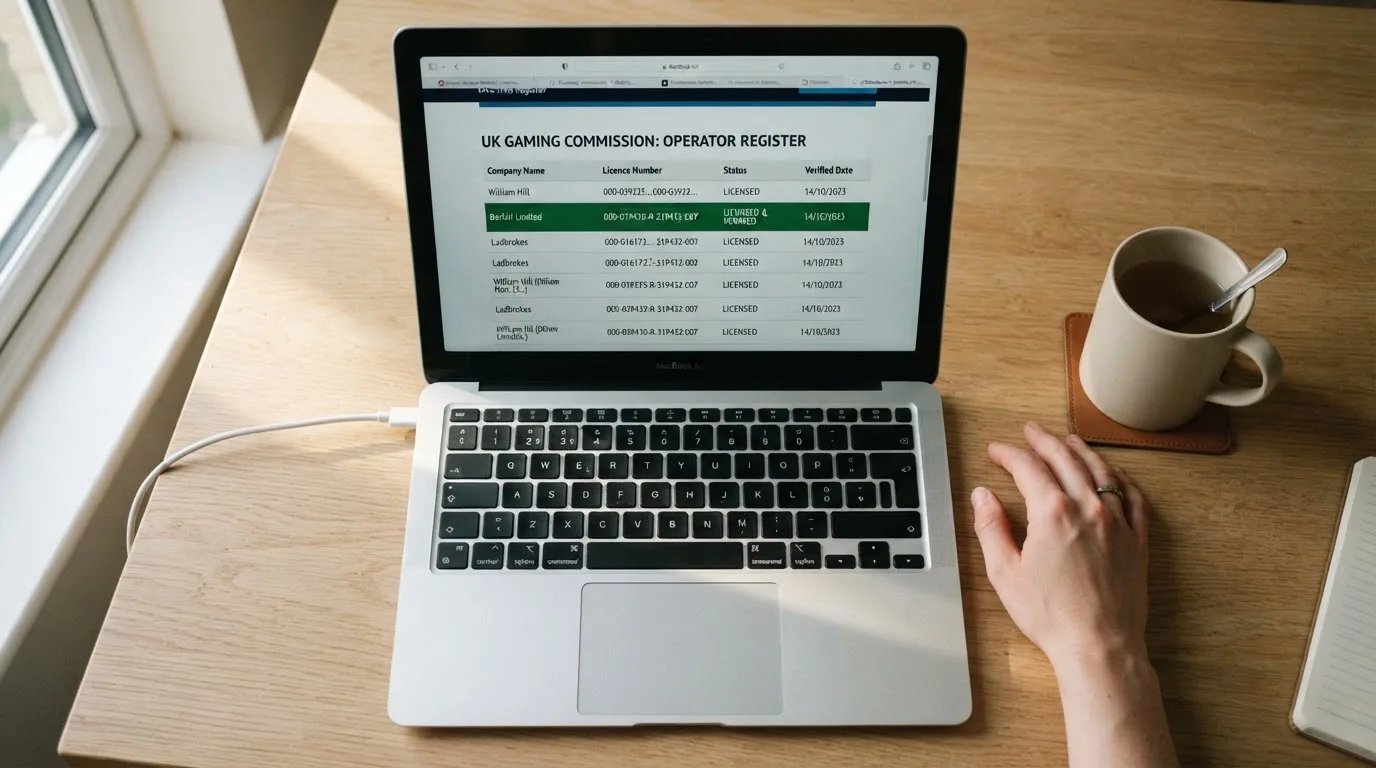
The Commission’s public register is searchable by business name, trading name, domain or account number, and the search returns the licence categories, the licence holder, and the trading names under that licence. The register is the whole test of whether a brand holds a licence for customers in Great Britain. A licensed operator’s licence number appears on the operator’s site, usually in the footer or the terms-and-conditions page, and the number on the site matches the number on the register. A brand whose domain is not on the register at all is not licensed, and a brand that uses a Curaçao, Maltese or Gibraltar licence alone is not licensed for customers in Great Britain under the Gambling Act 2005.
How is the return on a bet worked out from the stake and the odds?
The return on a winning bet is the stake multiplied by the decimal odds. At decimal odds of 3.00, a £10 stake returns £30, of which £10 is the returned stake and £20 is the profit. At fractional odds of 2/1, the same £10 stake returns £30 — the £10 stake plus £20 profit at the fractional price. The conversion between formats is a/b → a ÷ b + 1, so 2/1 becomes 3.00, 1/1 (evens) becomes 2.00, 4/6 becomes 1.67, and 11/4 becomes 3.75. A combination bet’s odds are the product of each leg’s odds, and a £10 stake at combined odds of 12.00 returns £120 if every leg wins.
What is the bookmaker’s margin and how can it be seen in the odds?
The bookmaker’s margin is the slice of every pound staked that the operator keeps on a market. On a two-way market at decimal odds 1.90 / 1.90, the payout share is the reciprocal of the sum of the implied probabilities — 1 ÷ (1/1.90 + 1/1.90) = 0.9500, or 95%. The margin is 1 minus the payout share — 5% in this case. A £100 stake split evenly across both outcomes returns £95 on average, and the bookmaker keeps £5. The margin is the bookmaker’s read on the cost of the market, and the customer’s read of the same market is the overround — the sum of the implied probabilities of every outcome. The further the overround is from 100%, the bigger the margin. On a cricket match-winner market the margin is typically 4–8%, on a bet builder it is higher, and on a player market it can be wider still.
Rugby, cricket & Gaelic – Motorracingtips.com
Content created by the «Motorracingtips.com» team
