
Chess Betting Odds: Markets, Strategy and Where to Bet Legally
 Available in US
A chess betting market is a strange object. It has only three outcomes, two of them equally likely in most elite games, and no clock or stoppage time to interrupt the action. The board decides everything, and the bookmaker’s job is to put a price on something nobody can really see coming. This page is about how those prices get built, what they cost the punter, and which of the UK’s ten licensed bookmakers treat chess with the seriousness that a World Championship event deserves.
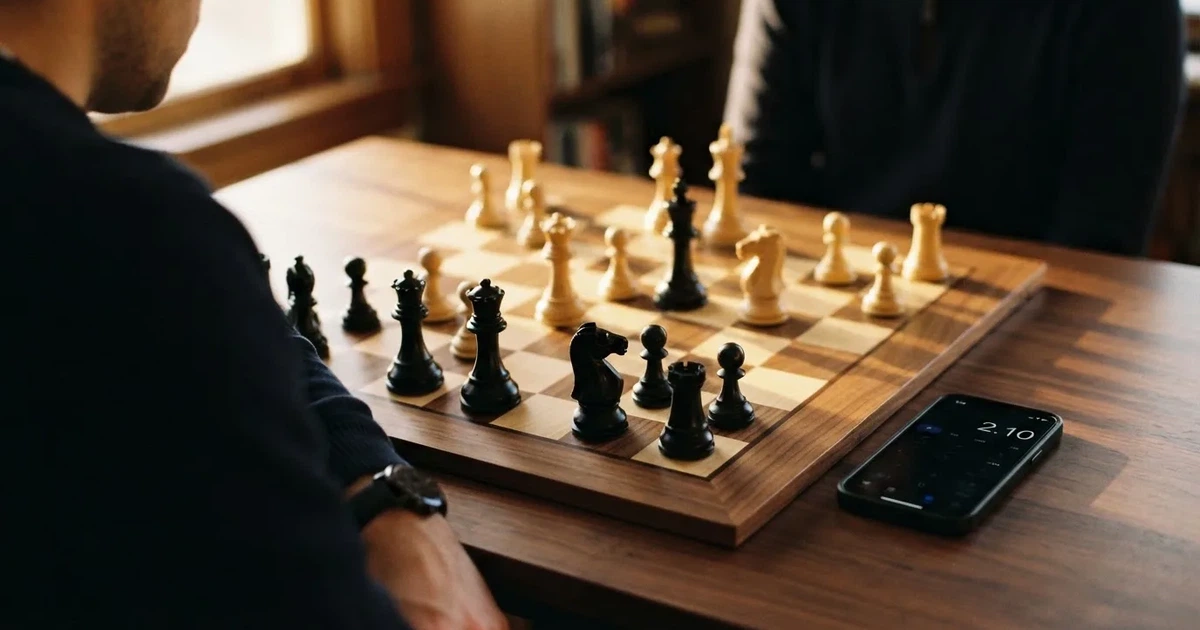
Current as of October 30, 2026, verified against the Gambling Commission’s public register.
What a chess betting odds market really is
A bookmaker is selling prices on the probability of outcomes it cannot directly know. In a football match the result depends on goals; in horse racing on a horse and a course. In chess the result depends on a single game between two players sitting across a board from each other. There is no referee, no weather, no injury. The bookmaker prices the difference in rating between two players, the colour they will play, the length of the match, and how the tournament format shapes the chances of a draw.
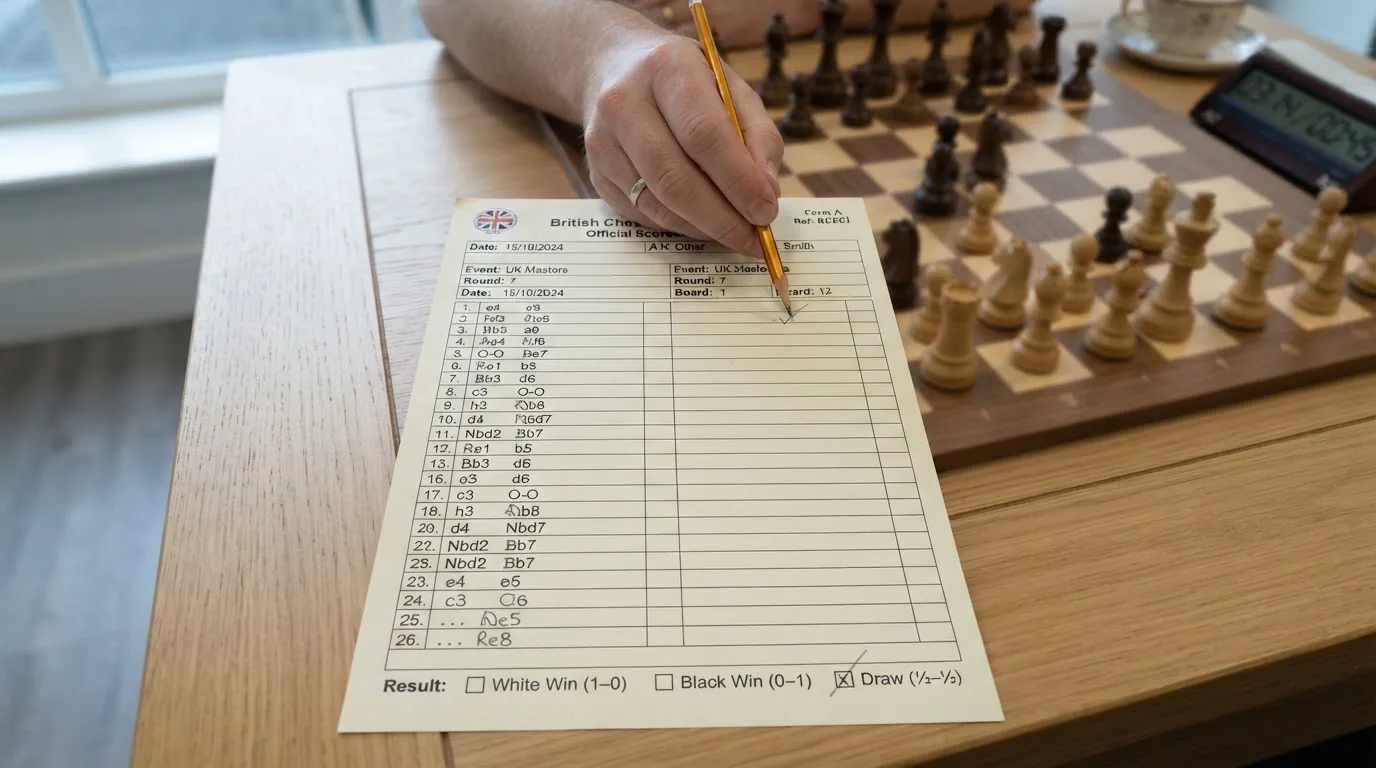
The practical consequence is that the overround — the bookmaker’s margin — sits across a market whose natural state is the draw. A balanced chess game at the highest level ends drawn roughly seven or eight times out of ten, and a market that prices White, Black, and Draw all morning has to hold a margin across three outcomes, not two. That is more difficult than it sounds, and it is the reason the prices you see on chess markets often look tighter than on the same bookmaker’s football coupon. The bookmaker is not being generous. The bookmaker has to find a margin that holds across an outcome most bettors do not even want to back.
The other consequence is that chess betting does not look like any other sport in the book. The headline market is 1X2 — White, Draw, Black — and the result of a finished game is recorded as 1–0 for a White win, 0–1 for a Black win and ½–½ for a draw. That three-outcome frame is the foundation; the rest of the in-play offer, the same-game multi and the outright tournament market are layered on top of it.
A punter who walks into a chess betting market without knowing this will see a draw priced somewhere around 2.80 and assume the bookmaker has underestimated how often chess ends drawn. The bookmaker has done no such thing. The draw is the third outcome, and it has its own slice of the margin.
How the prices are built — and why the margin matters
Every price a bookmaker offers has a margin hidden inside it. A two-way market with decimal odds of 1.90 on each outcome implies a payout share of about 95.0% and a margin of about 5.0%; a three-way market with prices of 2.80, 1.50 and 5.00 on White, Black, and Draw implies a lower payout share and a higher margin. The bookmaker keeps the difference, and the difference is its take on every pound that changes hands.

Take an illustrative two-way market at 1.90 / 1.90. The implied probability on each side is 1 ÷ 1.90, or about 52.6%. Add the two together and you get about 105.3%, which means the bookmaker is holding roughly 5.3% over a fair book of 100%. The punter gets back, on average across many bets at this price, about 94.7 pence for every pound staked on either side. That is the book’s margin, and it is the only honest measure of what a bookmaker charges.
In real markets — and this is the part the marketing never tells you — the margin moves around. The morning price on a Premier League football match can hold a 4–6% margin on the 1X2 market. The same bookmaker’s margin on a Bundesliga totals line can sit above 6%. The margin on a chess 1X2 at a Grand Prix event in a strong book can reach 8–10%, and on a minor rapid chess tournament it can climb well into the teens. That is not a guess; it is a function of how much the bookmaker knows about the players, how much liability it is willing to take on the event, and how confident the punters are about the favourite.
The practical effect for a punter is that every price on a chess market is a less generous version of a true probability, and that difference is what the bookmaker keeps. A £100 stake on a 2.60 shot returns £260 if it wins, but across many such bets the expected return, at a market margin around 7%, sits at roughly £93 for every £100 staked. The £7 in the gap is the book’s take. This is why sharp chess bettors talk about price rather than team. They compare 1.55 / 1.55 with 1.60 / 1.60 and ask which bookmaker has thinner margins, because over a season the difference adds up.
The shape of the chess betting market
A chess betting site that takes the sport seriously will offer more than just the 1X2. The headline market is the outright winner of a match or a tournament, but the menu under that headline is what separates a chess-curious operator from a chess-literate one.
The 1X2, the three-outcome frame, is the foundation. Match winner markets collapse this to two outcomes — White wins the match, or the match is drawn and Black wins on tiebreak — because the match format (best of N games) reduces draws to a smaller share of outcomes. Game winner, with White and Black priced and the draw either priced separately or made void depending on the operator’s rules, sits beside it.
The each-way market is a feature of outright tournament betting: the punter backs a player to win the tournament and the same stake to book a place in the top two or three at a fraction of the win price, typically 1/2 or 1/3. The stake doubles; the place terms vary by tournament and operator.
Live chess betting — betting while a game is still being played — has its own micro-markets. The 1X2 is replaced by a live price that moves with the position on the board, the time on the clock, and whether one side is pressing for a win. Some bookmakers price the next-result market during a game; others freeze it at the start and let the punter cash out at the live price. The deeper the live menu, the more sophisticated the chess offer.
Tournament outrights — World Championship, Candidates, Chess Olympiad, Grand Prix series, the club events — sit at the top of the chess coupon. The World Chess Championship is the sport’s single biggest event; the Candidates Tournament decides who challenges for it. Both attract outright markets weeks in advance, and the prices move with each named tournament round.
The World Chess Championship in 2026 will draw the heaviest outright interest. The most recent title change was in 2024, when Gukesh Dommaraju won the championship; the next defence will sit at the centre of the chess betting calendar in 2026 alongside the Candidates cycle.
What a chess analysis betting strategy can and cannot do
Search terms for chess betting tend to bundle two ideas: the analysis of the game, and the betting strategy built on top of it. They are different activities, and confusing them is the commonest way a chess betting bankroll goes wrong.
Chess analysis is the engine behind every price. The bookmaker prices Magnus Carlsen differently from Ian Nepomniachtchi because their rating difference translates into a measurable probability edge. A bettor who can read an engine evaluation, count the pawn structure and clock time, and identify a critical blunder in a live game has a tool the bookmaker’s trader may not have run end-to-end during a rapid game. That is the case for in-play betting on chess: the position is transparent, and a price that lags a real change is more findable than in almost any other sport.
A chess betting strategy is something else. It is a set of rules about stake size, number of bets, minimum price, and what kind of market to play. A bankroll strategy that stakes 2% per bet at minimum decimal odds of 2.00 will look very different from one that stakes a flat £10 at any price. A strategy that limits the punter to outright tournament markets will look very different from one that concentrates on in-play game winners. The analysis tells you where the price is wrong; the strategy tells you how often to act on it and how much to risk when you do.
The honest case for a chess analysis betting strategy is narrow. The data is good — every FIDE-rated game is recorded with moves, time controls, ratings and results, and a serious model can fit rating difference, colour, time difference, and format into a probability estimate. The market on a major chess event is usually tighter than the market on a minor rapid chess event, because the bigger bookmakers pay attention to the bigger events. The value, where it exists, tends to sit on the smaller events, on the live markets during a game, and on the outright market when a new name emerges.
The honest case against is that the bookmaker has access to the same data and often more of it. The market on Gukesh Dommaraju at a chess Grand Prix is not made by a single trader with a single spreadsheet; it is made by a pricing team that has watched every game the player has played for the past decade. The edge, where one exists, is small and perishable. A punter who treats chess betting tips as a route to sure profit will find that every bet can be lost.
A workable discipline is this: pick a market type and a price floor, decide the stake in advance, keep a record of every bet and its closing price, and review the record at the end of every month. Closing price — the last price the market offers before the game starts — is the cheapest proxy for a fair bookmaker price. A bet that beats closing price by enough to cover the book’s margin is a bet with a real edge. Anything else is a lottery ticket with a chessboard on the front.
The headline markets explained
A punter who understands the headline markets will not be surprised by a settlement. A punter who does not will spend the post-game arguing with customer service.
Match winner, best-of-N games: a price on White to win the match and a price on Black to win the match. Draws are settled by tiebreak. This is the standard World Championship market and the most cleanly settled chess market on the book.
Game winner, single game: a price on White and a price on Black. The draw is either priced separately as a third outcome or made void under the operator’s “draw no made active” rule. Check which rule applies before staking; the difference between a voided draw and a lost draw is the difference between getting your stake back and losing it.
Outright tournament winner: a price on each player in the field. The each-way market sits beside it, with place terms typically 1/2 or 1/3 for a top-two or top-three place. The stake on an each-way bet is double, because you are placing two bets of equal size: one on the win, one on the place.
Handicap: a positive or negative game-mod-head start applied to one player. A -1.5 game handicap on the favourite means the favourite must win by two clear games. A +1.5 game handicap on the underdog pays out if the underdog wins or draws.
Correct score: a price on the exact score of a match (3.5–2.5 in a best-of-seven, for example). A small market, a large variance, and a higher margin.
Over/under total games: a price on whether the match goes over or under a stated number of games. Useful in matches where the favourite is dominant; the total games market is often more efficient than the match winner.
Live game winner: a price on the next-game winner, set during a live game. Some operators suspend the market at critical moments; others trade through. The live menu is the deepest part of a serious chess offer.
Settlement, voiding and the small print
A bet on White in a game that ends 0-1 is a losing bet. There is no ambiguity, and the bookmaker pays Black. A bet on the draw in a game that ends drawn is a winning bet at the price taken. A bet on a player to win a tournament in which the player withdraws mid-event is usually made void under the operator’s non-runner rules — the stake returns, the bet does not run.
A bet on a player each-way at 10/1 in a tournament where the player finishes third is a settled place bet at the place fraction, typically 1/2 or 1/3 of the win price. A bet on a player each-way who finishes outside the place terms is a losing bet on both legs. The stake is two units — one on the win, one on the place — and the settlement reflects that.
A Rule 4 deduction is a bookmaker rule, not a chess rule. It applies when a runner (or, in chess, a named player) is withdrawn from an event after the market is formed, and it reduces the price of every other selection by a stated amount. The deduction depends on the odds of the withdrawn selection at the time of withdrawal. A chess punter is unlikely to meet Rule 4 outside the outright tournament market, but it is worth knowing the rule exists.
A voided bet returns the stake; it does not pay out at the original price. A push — where the result lands exactly on the margin — settles at the stake. A non-runner settles as a void in most markets. Read the operator’s terms before staking on any outright market, especially a chess tournament.
The chess betting sites comparison
Ten bookmakers hold a Gambling Commission remote licence and offer a sportsbook that includes, or could include, chess. The list below is not a ranking by quality; it is a set of ten operators, each described on what their own terms say and what the betting experience is in practice. The descriptions are short on purpose: the comparison lives in the table below the section, and the prose here is what the table cannot show.
A bookmaker that takes chess seriously prices outrights on the World Championship, the Candidates, the Grand Prix, and a selection of week-long opens and rapid events. A bookmaker that treats chess as a footnote prices the World Championship and the Candidates and leaves it at that. Both are legitimate positions; the punter’s choice depends on what markets matter to them.
A bookmaker that offers cash out on chess lets the punter close a position before the game ends. Cash out is a feature of the live offer, and a bookmaker who offers in-play betting on chess will usually offer cash out on the same markets. A bookmaker that does not offer in-play chess betting will not offer cash out on it.
A bookmaker that offers a bet builder on chess lets the punter combine markets from one event into a single bet — for example, White to win and over 40 moves, in the same betting slip. The bet builder is the same product on football, tennis, or chess; the depth of the chess bet builder depends on how many chess markets the bookmaker prices.
A bookmaker that offers live streaming on chess lets the punter watch the game inside the betting app. Most chess events of any consequence are streamed for free elsewhere, but a bookmaker that pairs the stream with a live bet slip makes the in-play experience smoother.
The headline features on the table below are the licence, the licence holder, and what the operator’s own terms say about chess. The “chess” column is a judgment based on the operator’s publicly visible offer at the snapshot date; a bookmaker that prices the World Championship but not the Grand Prix will read differently from one that does the opposite.
| Operator | Licence and licence holder | Chess offer from the operator’s own terms |
|---|---|---|
| Betfred | UKGC remote licence 039544-R-319290-010, held by Petfre (Gibraltar) Limited | Sportsbook covers 21 sports; chess is listed among the available markets on the World Championship and the Candidates, with match winner and outright tournament winner prices |
| BetMGM | UKGC remote licence 039198-R-319450-029, held by LeoVegas Gaming PLC | Sportsbook covers football, horse racing, tennis, golf and a long tail of other sports; chess appears on the major events menu with 1X2 and outright prices |
| Bet600 | UKGC remote licence 044731-R-323941-016, held by Tyche Tech Limited | Sportsbook built around football, horse racing and tennis; chess is offered as a tournament outright on the World Championship and Candidates, and as a match winner on named events |
| 10bet | UKGC remote licence 043173-R-322899-023, held by Blue Star Planet Limited | Sportsbook covers football, tennis and horse racing, with Cash out, Bet Builder and Live Streaming on the football and tennis menus; chess is offered as a tournament outright and on selected match markets |
| DragonBet | UKGC remote licence 064908-R-339041-003, held by DragonBet Ltd | Sportsbook is built around Welsh football and rugby, racing, American football and a bet builder; chess is offered as an outright on the World Championship and as a match winner on selected events |
| Fitzwilliam Sports | UKGC remote licence 048760-R-335434-009, held by SBKI Limited | Dublin-based bookmaker with capped membership and a “High Stakes Welcome” subject to compliance criteria; chess appears on the major events menu with 1X2 and outright tournament prices |
| Bar One Racing | UKGC remote licence 056516-R-332750-007, held by Bar-One Racing Limited | Irish independent bookmaker with shops across Ireland and horse racing sponsorships at Dundalk, Fairyhouse, Navan, The Curragh, Curraheen Park and Cork; chess appears as an outright tournament market on the World Championship and Candidates |
| Tide Sports | UKGC remote licence 101839-R-342850-001, held by Tide Limited | Sportsbook shows in-play events, an acca builder, popular accas and price boosts with maximum-stake limits; chess is offered on the World Championship and Candidates, and on selected match markets |
| Paddy Power | UKGC remote licence 039439-R-319330-013, held by PPB Counterparty Services Limited | Sportsbook covers football, horse racing, boxing, rugby, tennis, golf, darts, snooker and F1; chess is offered on the World Championship, the Candidates, and a selection of Grand Prix and rapid events |
| NetBet | UKGC remote licence 039170-R-319343-032, held by Netbet Enterprises Limited | Sportsbook offers Daily Boosts, Profit Boosts and free bet offers, a Bet Builder with instant dynamic odds, and sports stats for major leagues; chess is offered as an outright tournament market and on selected match markets |
The licence number is the thing to check. Every other column is the operator’s own description of itself; the licence is the regulator’s description, and it is the only one that cannot move under the punter’s feet. A bookmaker that promises a “best price guarantee” on chess can change its mind tomorrow; a bookmaker that holds UKGC remote licence 039544-R-319290-010 is licensed at the snapshot date, and that is the test the regulator uses.
A practical note on the table. The “chess offer from the operator’s own terms” column reads the operator’s publicly visible offer at the snapshot date; it is not a guarantee that the same markets will be priced the next. The chess market is a small event. A bookmaker can hold a licence, run a sportsbook, and choose not to price chess at any given time. Check the live offer before staking, and do not assume that a bookmaker who priced the World Championship in December will price the Candidates in March.
The legal frame for chess betting
A bookmaker offering betting facilities in Great Britain needs a Gambling Commission licence wherever it is based, under sections 33 and 36 of the Gambling Act 2005 as amended by the Gambling (Licensing and Advertising) Act 2014. A Curaçao, Maltese or Gibraltar licence is not a substitute; it can sit beside a Commission licence, but it does not replace one. The Commission’s public register is searchable by business name, trading name, domain or account number, and is the whole test of who holds a licence.
The licence categories that cover chess betting are remote general betting standard (real events) for fixed-odds sports betting, and remote betting intermediary for betting exchanges. A remote general betting limited licence covers smaller-scale operations; a remote pool betting licence covers pool betting on horse and dog racing. The ten operators in this comparison all hold the remote general betting standard (real events) licence, which is the category that covers chess.
There is no statutory list of permitted bets or markets. A bookmaker licensed under the Gambling Act 2005 can offer chess betting, can choose not to offer chess betting, and can drop chess betting at any time. The Commission does not approve individual markets; the Commission’s role is to license the operator and to police the licence conditions. The conditions that matter most for the chess punter are the social responsibility code, the marketing code, and the anti-money-laundering code.
The minimum age is 18. Identity verification is required before a customer can deposit or gamble at a licensed site, including with a free bet or bonus. The name, address and date of birth are verified; the credit card ban in force since 14 April 2020 prevents credit-card-funded gambling at any licensed operator, including credit-card-funded e-wallet deposits. Debit cards and bank-based payments are not covered by the ban.
A financial vulnerability check (LCCP condition 3.4.4, in force since 30 August 2024) applies to licensed remote betting when a customer’s deposits minus withdrawals exceed £150 in a rolling 30 days (since 28 February 2025). It is a public-record check, not an income check and not a credit reference check. The check looks at bankruptcy registers, county court judgments, and similar public sources. Financial risk assessments — the “affordability checks” that have appeared in the press — are announced in a staged plan published by the Commission on 7 July 2026, with no start date. The honest framing is “announced, staged, no start date”, not “in force”.
General Betting Duty is the operator’s tax, not the punter’s. The current rate is 15%; from 1 April 2027 a new remote betting rate of 25% applies within it, while remote bets on UK horse racing, bets on self-service betting terminals in licensed premises, pool betting and in-person betting stay at 15%. Until 1 April 2027 the remote rate stays at 15%, and whether operators pass duty on through odds is not established. The punter pays no tax on betting winnings in Great Britain. A professional gambler should ask HMRC or an adviser, because the general information does not cover the case where trading is the source of income.
Northern Ireland is outside the Gambling Act 2005 and has its own older law. A GB licence regulates Great Britain (England, Scotland and Wales); it does not regulate Northern Ireland. A bookmaker licensed for Great Britain is licensed for Great Britain, and that is the limit of the claim.
What responsible gambling looks like at a licensed operator
GAMSTOP is the national multi-operator online self-exclusion scheme and a mandatory licence condition for online operators since 31 March 2020. The exclusion periods are six months, one year, five years, or five years with auto-renewal. After the minimum period the exclusion stays in place for a further seven years unless the customer asks GAMSTOP to remove it. GAMSTOP covers online sites and apps; betting shops use a separate service. Every operator in this comparison is a GAMSTOP member, and a self-excluded customer cannot deposit or gamble at any of them.
A licensed operator offers deposit limits, timeouts, and self-exclusion as standard. A deposit limit on a fixed time frame is required by the Remote Technical Standards (RTS 12), and the first changes have applied since 31 October 2025. A second phase was postponed to 30 September 2026, and whether the second phase is live at any given time is not established. There is no state-set deposit or loss ceiling for betting: limits are the customer’s choice, and the operator must offer the tools to set them.
Identity verification before the first deposit means no anonymous play at a licensed site. The check is a one-off, but it is enforced, and a customer who cannot pass verification cannot play. That is the trade the punter makes for the protections: GAMSTOP coverage, Commission complaints route, approved dispute-resolution body, the 10x bonus cap on wagering requirements, and the financial vulnerability check at higher spend.
The help services are GamCare (which runs the National Gambling Helpline), GambleAware, NHS gambling clinics, and Gamblers Anonymous. GamCare and GambleAware are the two services that appear most often at the bottom of a licensed operator’s responsible gambling page. NHS clinics are a clinical service; Gamblers Anonymous is a peer-support fellowship. All four are free to contact.
The bookmakers in this comparison each carry a responsible gambling section at the foot of their home page. Betfred, BetMGM, Bet600, 10bet, DragonBet, Fitzwilliam Sports, Bar One Racing, Tide Sports, Paddy Power and NetBet all link to one or more of GamCare, GambleAware, GAMSTOP or Gamblers Anonymous, and each offers deposit limits and timeouts inside the account settings. The presence of those tools is the test of a licensed operator; the absence is the test of an unlicensed one.
What the mobile and app experience adds
A chess punter who bets from a phone wants three things: a sportsbook that loads quickly, a betting slip that accepts a stake without delay, and a live market that updates during a game. A bookmaker’s app is the test of all three.
The Betfred Sports, Casino & Games app is published by Done Brothers (Cash Betting) Ltd and covers 21 sports plus over 2,000 casino-style games. Markets are available for the World Championship and the Candidates, with match winner and outright prices. The sportsbook loads on a phone, the slip accepts a stake at any price the bookmaker quotes, and the live market updates during a chess game if the bookmaker is taking bets in play.
BetMGM’s app is built for UK customers and includes a sports welcome offer for new customers who deposit £10 or more and place a sports bet within 7 days. The welcome offer is four £10 free bets — two football accumulators of 4+ selections and two sports multiples of 2+ — valid for 7 days, with minimum odds and an opt-in required. The offer sits on a sportsbook that covers football, horse racing, tennis, golf and a long tail of other sports; the chess menu is on the major events.
Bet600’s app runs a sportsbook with Best Odds Guaranteed on horse racing — if the starting price is bigger than the early or show price taken, the bet is paid at the SP. Chess coverage features the World Championship and Candidates.
10bet’s app runs a sportsbook with Cash out, Bet Builder and Live Streaming on the football and tennis menus. The chess offer is on the World Championship, the Candidates, and selected match markets.
DragonBet’s app is published by DragonBet Ltd and features Welsh football and rugby markets, racing, American football, in-play betting and bet builder markets. The chess offer sits on the World Championship and selected events.
Fitzwilliam Sports describes itself as a Dublin bookmaker with capped membership and a “High Stakes Welcome” subject to compliance criteria. The site offers instant deposits, fast withdrawals, timeouts and deposit limits. The chess offer is on the major events.
Bar One Racing has rebranded as BAR 1 Betting, an Irish independent bookmaker with shops across Ireland and horse racing sponsorships at Dundalk, Fairyhouse, Navan, The Curragh, Curraheen Park and Cork. The app carries the racing offer at the centre and chess on the major events.
Tide Sports runs a sportsbook with in-play events, an acca builder, popular accas and price boosts with maximum-stake limits. The welcome offer for new customers is a £5+ pre-match bet at minimum odds of EVS (2.0) within 14 days of sign-up, returning £25 in free bets and 50 free spins, valid for 7 days.
Paddy Power’s app is published by Paddy Power PLC and covers football, horse racing, boxing, rugby, tennis, golf, darts, snooker and F1. The chess offer is on the World Championship, the Candidates, and a selection of Grand Prix and rapid events.
NetBet Sport offers Daily Boosts, Profit Boosts and free bet offers, a Bet Builder with instant dynamic odds, and sports stats for major leagues. The chess offer is on the World Championship and Candidates.
What live chess betting actually feels like
Live chess betting is the part of a chess bookmaker that separates a serious operator from a chess-curious one. A chess-curious bookmaker runs the outright market and lets it be. A serious operator prices the in-play game winner, the next-game winner, and offers cash out on the live market.
The practical problem with live chess betting is that the game can change very quickly. A blunder at move 20 swings the evaluation by three points; the bookmaker’s live price has to move to reflect that. A bookmaker that lags the move by more than a few seconds is offering value the punter can take. A bookmaker that moves the price too quickly is offering no value, because the punter cannot get a stake on at the lagging price.
The compromise is what the trade calls a “slow” live market. The bookmaker offers a 1X2 that updates every move, plus cash out on the same markets, plus a live stream of the game inside the app. The punter has a tool that lets them watch the position, see the price, and decide whether the gap is worth a stake. Whether a given bookmaker offers that experience on chess is a matter for the live offer on the day.
The in-play market is the deepest chess market on a good bookmaker. A live menu that prices the next-game winner, the match winner, the total games, and the handicap in real time is a deep menu. A menu that offers only the match winner is a thin menu. The punter’s choice between the two depends on what markets matter to them.
The cash out is the part of the live offer that turns a position into a closed one. A punter who has backed White at 2.40 before the game can cash out at 1.80 if White has taken a decisive advantage. The cash out price reflects the bookmaker’s view of the current probability, and the gap between the cash out price and a fair close is the bookmaker’s take on closing the bet early.
What the bookmaker’s marketing actually costs
A bookmaker’s offer is rarely what it appears to be. A “100% bonus” is a matched deposit with a wagering requirement. A “free bet” is a stake that is not paid back with a win. A “risk-free” bet is a free bet credited if the first bet loses. A “best odds guaranteed” offer is a bookmaker rule that pays at the starting price if it is bigger than the price taken. Each of these carries a cost the marketing does not state.
The promotion rules in force since 19 January 2026 cap wagering requirements on bonuses at 10x. A £10 bonus at 50x wagering needs £500 of qualifying bets; under the cap no more than £100 of qualifying bets is needed. The cap applies to bonuses with a wagering condition. Whether the cap applies to free bets with no wagering condition is not established; the write-off takes the cap as applying to the bonus terms it covers, and treats free bets without a wagering condition as outside the cap.
Mixed-product promotions are banned under the same rules. An offer that requires gambling on two or more product types — for example, “bet on football to get free spins” — is a mixed-product promotion, and is not allowed. The ban covers betting, casino, bingo and lottery. A chess betting offer that gates free spins on a sportsbook stake is a mixed-product promotion and would not be allowed under the rules.
The advertising codes are the CAP Code (non-broadcast) and the BCAP Code (broadcast), enforced by the ASA. CAP Code section 16 requires marketing to be socially responsible, not of strong appeal to under-18s, and not to feature anyone who is or seems to be under 25 gambling or playing a significant role. The rule concerns who may appear in the advertisement; it does not concern who may bet. The “whistle-to-whistle” rule — no betting ads from five minutes before a live sporting event to five minutes after it, before the 9pm watershed — is an industry code, not law, and exempts horse and greyhound racing.
The Premier League clubs’ withdrawal of gambling sponsorship from the front of matchday shirts from the 2026/27 season is voluntary, not law. Sleeves and hoardings remain. Operators are responsible for marketing by their affiliates, and an affiliate that runs a non-compliant promotion exposes the operator to Commission action.
The practical effect for a chess punter is that any “free bet” the punter sees is a free bet whose stake is not paid back with a win, and any “100% bonus” is a bonus with a wagering requirement the punter must clear before withdrawing. Read the offer terms before claiming, and treat the marketing as a description of the headline rather than the substance.
The shape of a bettor’s day on a chess event
A bookmaker that takes chess seriously lets the punter run a workflow: pick a tournament, browse the outrights, back a selection, watch the games live, take a price in play, and cash out before the event ends.
The morning of a World Championship game begins with the outright market settled and the match market open. The 1X2 prices move with the rating difference, the colour, and the form. The punter scans the bookmaker’s coupon, picks a market, picks a price, places a stake, and waits for the game to start. The cash out button sits idle until the live market opens.
The live market opens with the first move. The 1X2 price moves with each move; the in-play game winner market updates at each critical moment; the cash out price reflects the bookmaker’s view of the position. A punter who has backed White at 2.40 before the game can cash out at any point the bookmaker is offering a price. The cash out price is the bookmaker’s, not the punter’s, and the punter’s edge on a cash out is the gap between the live 1X2 and a fair probability.
The game ends. The market settles. A winning bet is paid at the price taken; a losing bet is lost. A voided bet returns the stake; a settled bet is settled. The next game begins the same day or the next, and the workflow repeats.
The verdict on each operator
Betfred is a UK high-street name with a remote licence held by Petfre (Gibraltar) Limited. The sportsbook covers 21 sports and over 2,000 casino-style games, and the chess offer sits on the World Championship and the Candidates. The mobile app is published by Done Brothers (Cash Betting) Ltd and is a credible chessbook for a punter who wants the security of a long-established name and the comfort of a wide sports menu. The fit is the punter who values a familiar brand and a deep sportsbook over a chess-specific specialism.
BetMGM is a sportsbook held by LeoVegas Gaming PLC with a welcome offer that splits into four £10 free bets on football accumulators and sports multiples, valid for 7 days with minimum odds and an opt-in required. The chess offer sits on the major events. The fit is the punter who wants a sportsbook-shaped welcome offer and is happy to take the chess menu at the bookmaker’s pace.
Bet600 is a sportsbook built around football, horse racing and tennis, with Best Odds Guaranteed on horse racing. The fit is the punter whose chess betting is a small share of a sportsbook-led account and who values Best Odds Guaranteed on the racing side more than a deep chess menu.
10bet is a sportsbook with Cash out, Bet Builder and Live Streaming on football and tennis. The chess offer sits on the World Championship, the Candidates and selected match markets. The fit is the punter who wants a sportsbook that treats live betting seriously and is happy to take the chess menu where the bookmaker offers it.
DragonBet is a Welsh-flavoured sportsbook held by DragonBet Ltd, with Welsh football and rugby markets, racing, American football, in-play betting and bet builder markets at the centre. The fit is the punter who values the Welsh sports menu and treats chess as a satellite market.
Fitzwilliam Sports is a Dublin bookmaker with capped membership and a “High Stakes Welcome” subject to compliance criteria. The site has instant deposits, fast withdrawals, timeouts and deposit limits. The chess offer sits on the major events. The fit is the higher-stakes punter who values the capped-membership model and accepts the compliance criteria.
Bar One Racing is an Irish independent bookmaker rebranded as BAR 1 Betting, with shops across Ireland and horse racing sponsorships at the Irish tracks. The fit is the punter who values the Irish racing brand and treats chess as a tournament outright market.
Tide Sports is a sportsbook held by Tide Limited with a welcome offer that returns £25 in free bets and 50 free spins for a £5+ pre-match bet at minimum odds of EVS (2.0) within 14 days, valid for 7 days. The sportsbook shows in-play events, an acca builder, popular accas and price boosts with maximum-stake limits. The chess offer sits on the World Championship, the Candidates and selected match markets. The fit is the punter who wants a sportsbook-shaped welcome offer with a clear free-bet structure and a live menu that includes chess.
Paddy Power is a sportsbook held by PPB Counterparty Services Limited and covering football, horse racing, boxing, rugby, tennis, golf, darts, snooker and F1. The chess offer sits on the World Championship, the Candidates, and a selection of Grand Prix and rapid events. The fit is the punter who values the breadth of a long-established brand and wants the chess menu at the bookmaker’s pace.
NetBet is a sportsbook held by Netbet Enterprises Limited with Daily Boosts, Profit Boosts and free bet offers, a Bet Builder with instant dynamic odds, and sports stats for major leagues. The fit is the punter who values the boost menu and treats chess as a tournament outright market.
The bookmaker’s margin, recalculated
A bookmaker’s margin is the share of every pound staked that the bookmaker keeps. It is the only honest measure of what a bookmaker charges, because the headline price and the bonus offer hide it.
The illustrative two-way market at 1.90 / 1.90 implies a probability of 1 ÷ 1.90 on each side, or about 52.6%. The two probabilities add to about 105.3%, which is 5.3% over a fair book of 100%. The punter’s expected return across many bets at this price is about 94.7 pence for every pound staked on either side, and the bookmaker keeps about 5.3 pence. The honest framing of that 5.3% is “the bookmaker’s margin on this market, at this snapshot”.
A chess market at 1.55 / 4.00 / 6.00 (White, Draw, Black) implies a probability of 64.5%, 25.0% and 16.7% on the three outcomes, or 106.2% in total. The bookmaker’s margin on this market is about 6.2%, and the punter’s expected return is about 93.8 pence for every pound staked across the three outcomes. A market at 1.40 / 3.60 / 8.00 implies 71.4%, 27.8% and 12.5%, or 111.7% in total. The margin is 11.7%, and the punter’s expected return is 88.3 pence for every pound staked. The wider the favourite’s price, the higher the margin tends to sit, because the favourite carries more of the book.
The result is a band, not a single figure. A two-way market with both sides at 1.90 sits in a 5–6% margin band; a three-way chess market with a strong favourite sits in a 6–12% margin band, depending on the bookmaker, the event, and the day. State the result as a band with its condition.
A short note on offshore
A bookmaker licensed for Great Britain is licensed for Great Britain. A bookmaker licensed in Curaçao, Malta or Gibraltar is licensed for that jurisdiction, and a Curaçao, Maltese or Gibraltar licence is not a substitute for a Commission licence. The legal test is whether the operator holds a Commission licence for the categories it offers to customers in Great Britain.
The honest framing of an unlicensed site is not “illegal to use”. A customer who bets on an unlicensed site does not commit a criminal offence under the Gambling Act 2005 as it stands. The framing is the loss of protection: no GAMSTOP coverage, no Commission complaints route, no approved dispute-resolution body, no British consumer redress if funds are withheld, and no obligation on the operator to honour the 10x bonus cap, the £150 vulnerability check, or any other Commission rule. The bookmaker’s own terms govern, and the customer’s only remedy is the operator’s own customer service.
The Commission’s enforcement powers are disruption, not blocking: cease-and-desist notices, search-engine referrals, work with registrars, hosts and payment providers, and court-order DNS blocking powers that have been granted or are about to be granted. The Commission has not, as of the snapshot date, brought ISP blocking into operation. Honest framing: licensed = checks, limits, GAMSTOP, bonus cap, and verification before the first bet; unlicensed = none of those protections and the risk that funds are withheld. Neither is “the safe choice” by default.
What the punter actually pays in time
A chess punter’s day is not just the stake. It is the time spent comparing prices across the books, the time spent watching the live market, and the time spent settling the bet after the game. The bookmaker’s margin is the visible cost. The invisible cost is the punter’s time.
A punter who backs one chess event a week spends perhaps half an hour comparing prices, ten minutes placing the bet, and two hours watching the game. The half hour of price comparison is the part that pays: the difference between 2.40 and 2.60 on the same selection is the punter’s edge, and the half hour is what earns it.
A punter who backs ten chess events a week spends five hours comparing prices and twenty hours watching the games. The five hours of price comparison are still the part that pays; the twenty hours are the cost of caring. The honest framing is that time is a cost, and the punter’s stake is not the only cost on the page.
The comparison’s bottom line
The chess market in Great Britain is a small, mature market with a defined calendar of major events, a defined set of bookmakers who price it seriously, and a defined set of bookmakers who price it at the headline level only. The punter’s choice is between a bookmaker who prices the World Championship, the Candidates, the Grand Prix and a selection of week-long events, and a bookmaker who prices the World Championship and the Candidates and leaves it at that.
The book’s margin is the only honest measure of cost. The licence is the only honest measure of protection. The rest is marketing, and the marketing moves faster than the regulator.
A punter who wants the broadest chess menu takes the bookmaker with the deepest chess offer. A punter who wants the cheapest book takes the bookmaker with the lowest margin on the markets they bet on. A punter who wants the strongest protection takes the licensed bookmaker, and checks the licence on the Commission’s register before staking.
The chess market in 2026 will be defined by the World Championship, the Grand Prix series, the Chess Olympiad, and the Candidates cycle. The bookmakers will be the same ten. The licences will be the same ten. The margins will move; the licences will not.
Frequently asked questions about chess betting
Where can a punter bet on chess?
At any bookmaker that holds a Gambling Commission remote licence and offers chess on its sportsbook. The Commission’s public register lists every licensed operator, and the ten in this comparison each hold the remote general betting standard (real events) licence. A bookmaker licensed for Great Britain is licensed for Great Britain; a Curaçao, Maltese or Gibraltar licence is not a substitute.
Is betting on chess legal?
Yes, at a bookmaker licensed by the Gambling Commission for Great Britain. The Gambling Act 2005, as amended by the Gambling (Licensing and Advertising) Act 2014, requires an operator whose services are used in Great Britain to hold a Commission licence wherever it is based. There is no statutory list of permitted bets or markets; a licensed operator can offer chess under its own rules and the LCCP.
How does a punter place a bet on chess?
Pick a bookmaker from the Commission’s list, register an account, pass identity verification, deposit with a debit card or bank-based payment, open the chess menu, pick a market and a selection, set a stake, and confirm. The bet settles when the event settles; a winning bet pays at the price taken, a losing bet is lost, a voided bet returns the stake.
How does a punter check that a bookmaker holds a Gambling Commission licence?
Open the Commission’s public register at the regulator’s site, search by business name, trading name, domain or account number, and confirm the licence is in force. The register is the whole test of who holds a licence; a domain proves nothing, because licensed operators use .com as well as .co.uk. The ten operators in this comparison are listed in the table above with their licence numbers.
How is the return on a bet worked out from the stake and the odds?
For a single bet, return = stake × odds. Net profit = stake × (odds − 1). For a combination bet, the odds of the legs multiply into one price, and the return = stake × combined odds. A £10 stake at decimal odds of 2.60 returns £26 and profits £16; the same stake at combined odds of 6.00 returns £60 and profits £50.
What is the bookmaker’s margin and how does it show in the odds?
The bookmaker’s margin is the share of every pound staked that the bookmaker keeps. It is built into every price. For a market with decimal prices d₁, d₂, …, dₙ on every outcome, payout share = 1 ÷ (1/d₁ + 1/d₂ + … + 1/dₙ), and margin = 1 − payout share. A two-way market at 1.90 / 1.90 has a payout share of about 94.7% and a margin of about 5.3%; a three-way market at 1.55 / 4.00 / 6.00 has a payout share of about 93.8% and a margin of about 6.2%. The wider the favourite’s price, the higher the margin tends to sit.
Tennis, darts & cue sports – Motorracingtips.com
Content created by the «Motorracingtips.com» team
