
Cycling Betting Odds 2026: Where the Price Sits and What a Picket Picks
 Available in US
The shelves a Grand Tour peloton rides across each summer are also where most of the year’s cycling betting odds sit. Three weeks of racing, twenty-plus stages, a market that opens days ahead and keeps moving until the flag drops, and a bookmaker’s margin baked into every price. A page that treats cycling as a niche bolted onto a football book understates what it really is. From the Tour de France down, it is its own sport, with its own calendar and its own handful of betting markets that the bigger generalist books price tighter than anything else on their site.
This page is about those odds. It is about where they come from, what the licensed bookmakers serving Great Britain actually publish for the major races, and how a punter reads a price once a margin has already been pulled out of it. The shortlist that follows is built around that brief: who prices the Grand Tours and the one-day Classics, who offers race winner and stage markets at the front of the card, and whose odds carry a margin a regular customer can live with.
Data current as of October 30, 2026, checked against the Gambling Commission’s public register.
The cycling calendar and why it shapes the odds
Governing body and the road season
The UCI (Union Cycliste Internationale), based in Switzerland, has governed road cycling since 1900 and holds annual men’s and women’s road world championships. Below the UCI sit continental bodies, national federations and the race organisers themselves, but for the punter it is the UCI calendar that decides when a price is on the board. The UCI WorldTour was created in 2005 as the ProTour and renamed the WorldTour in 2011; it includes the Grand Tours and other major stage races. Outside the WorldTour, the UCI ProSeries and the national calendars feed into the same teams, the same riders and the same bookmaker feed.
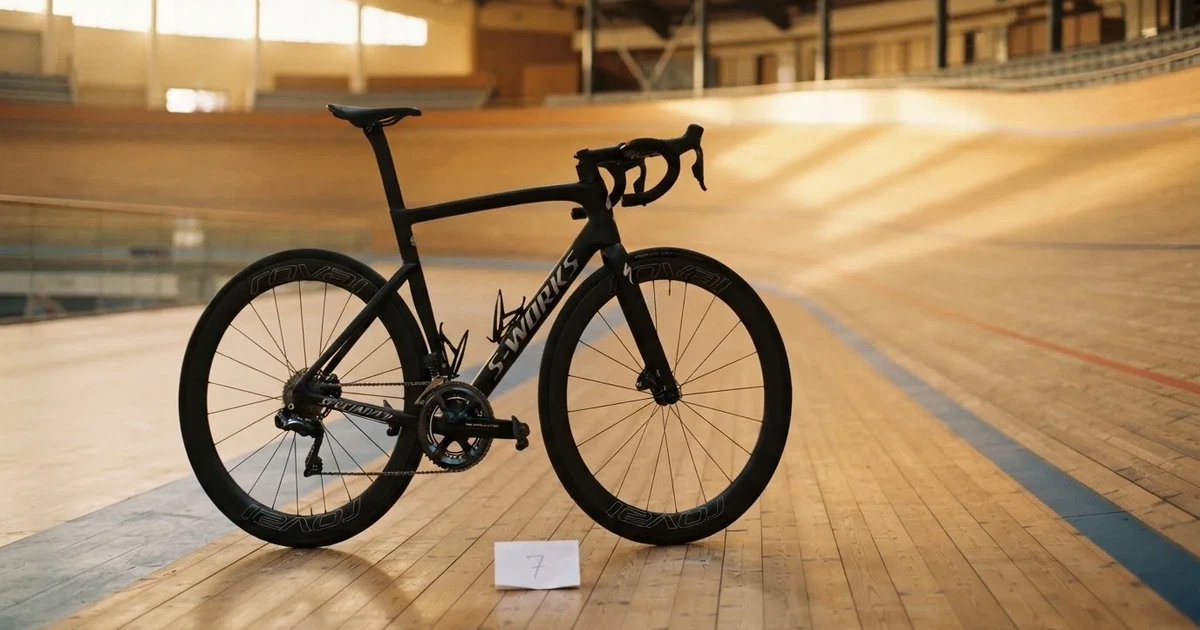
What that means in practice is that the season is long, dense and uneven. From January’s Tour Down Under through the spring Classics, the Giro in May, the Tour in July, the Vuelta in August and September, and a World Championships in the autumn, a UK-licensed bookmaker can have a cycling market open almost every week. Between those peaks there are gaps, and on a Tuesday in February the cycling tab on a generalist sportsbook may list three races at most.
The three Grand Tours
The three Grand Tours are the Giro d’Italia (first held 1909), Tour de France (1903) and Vuelta a España (1935); UCI rules allow Grand Tours to last 15 to 23 days. Grand Tour leaders wear a pink jersey in the Giro, yellow in the Tour and red in the Vuelta; races usually include two rest days. Each is run over three weeks, twenty or so stages, and several thousand kilometres of road. The Tour de France in particular carries the bulk of the betting handle in cycling, both in front of the peloton and on the screen.
The 2026 Tour de France ran from 4 to 26 July 2026, starting in Barcelona with a team time trial and finishing on the Champs-Élysées in Paris, over 21 stages and 3,245 km with 23 teams. Tadej Pogačar (UAE Team Emirates, Slovenia) won the 2026 Tour de France, his fifth Tour victory. A race of that shape – a prologue-style team time trial, three weeks of high mountains and a final flat stage on the Champs-Élysées – is also a race book where the favourite-to-field gap in the outright market is wide, and where the stage markets turn over a dozen times a day once the racing starts.
Spring Classics and one-day races
Around the Grand Tours sit the one-day Monuments – Milan–San Remo, the Tour of Flanders, Paris–Roubaix, Liège–Bastogne–Liège and Il Lombardia – and the smaller Classics that fill the spring and late autumn calendars. These are shorter, sharper, and harder for the bookmaker to price. Form lines from one race to the next are noisy; a rider who wins the Tour of Flanders can be dropped on the cobbles of Paris–Roubaix a week later. Margins on the bigger Classics outright markets tend to be higher than on a Grand Tour stage winner, because the book is harder to make and the field is wider.

For the punter that means the cycling book is not a single thing. A price on the Tour de France yellow jersey at the start of July is one product, with a thin margin and a long field. A price on Liège–Bastogne–Liège a fortnight after Paris–Roubaix is another, with a thicker margin and a market that can be beaten only by reading the form lines the book has missed. Same sport, two different edges.
The market layers on a cycling card
Outright, stage and head-to-head
Three layers sit on top of almost every cycling race a UK-licensed bookmaker prices. The outright is the race winner market, priced at the start of the race and kept live through it; the stage markets turn over for each day of racing and close as the flag drops on the day’s stage; the head-to-head pits two named riders against each other on the day’s stage. Below those, an each-way market on the outright is offered by most bookmakers, paying a fraction of the win price if the rider finishes on the podium or in a specified place band.
For Grand Tours, outright and stage markets are the bread and butter of the cycling book. For one-day Classics, outright and head-to-head are what most generalist sportsbooks actually publish. Inside a Grand Tour, the bookmaker may also open a points classification market, a king of the mountains market, a young rider classification and a team classification – the four jerseys that the Grand Tours award. These carry more margin than the outright, because fewer punters bet them and the bookmaker’s price is set more on a view than on a screen feed.
In-play, ante-post and the price that ages
In-play on cycling is now standard on UK-licensed sportsbooks: a price that updates stage by stage, with cash out available once a market is suspended. The shape of an in-play cycling price is unusual because the race is long and the leaderboard can swing several times in a single mountain stage. A rider priced at 8.00 (7/1) at the start of a mountain stage can be backed at 2.10 (11/10) at the bottom of the last climb if he has dropped every other name on the card. That volatility is part of the appeal of in-play cycling, and it is also why bookmakers tend to keep their pre-event outright margin tighter than their in-play stage margin – they want the headroom once the race goes live.
Ante-post is the outright market priced days or weeks ahead of a race. For the Tour de France, ante-post opens the day after the previous Tour finishes, with a short-priced favourite and a long field that includes most of the major teams. By the time the race starts, that field has been thinned: withdrawals, injuries, team selection and form lines have all pruned the card. The price of the eventual winner often tightens sharply in the last fortnight before the Grand Départ as the ante-post book meets a screen feed for the first time.
How the margin sits on a cycling price
The margin of a two-way market, in plain arithmetic
A bookmaker’s margin is what is left of a unit of stake after all outcomes have paid out their share. Take an illustrative two-way market at decimal odds 1.90 / 1.90 (fractional 9/10). The implied probability of each outcome is 1 ÷ 1.90, or about 52.6 %. Add the two together and the sum is about 105.3 %. That sum, expressed as a number above 100, is the overround – the bookmaker’s margin, taken off every unit bet on the market. The bigger the overround, the more of each stake the bookmaker holds in expectation.
For a market priced at 1.90 / 1.90, the implied payout share is 1 ÷ 1.053, or about 95.0 %, and the margin is about 5.0 %. Plug the same shape into a market priced at 1.80 / 1.80 and the implied probabilities sum to 111.1 %, the payout share to about 90 % and the margin to about 10 %. Pricing at 2.00 / 2.00 gives a 100 % book – a margin of zero, which in practice no commercial bookmaker offers on a cycling market they care about.
The reason this matters to a punter is that the margin is the only number on the card that does not move with form. A rider’s price will shorten when he wins a tune-up race and lengthen when he crashes out of a warm-up event. The margin across the field stays where the bookmaker set it. On a Grand Tour outright priced the day before stage one, a margin of 5 % is on the low end of what a UK-licensed bookmaker runs on cycling. On an in-play stage winner market, the margin can climb past 8 % once the racing is live and the bookmaker has fewer competing books to watch.
Where the margin is thinnest, and where it bites
The thinnest margin in the book is on the outright favourite of a Grand Tour, in the last week before the race starts. By then the bookmaker has a feed of competing prices from other licensed operators and from the major overseas books, and the favourite sits at a price that implies a payout share of around 96 to 97 %. The thicker margins are on long-shot outright positions – the 200/1 (201.00) outsider in the Tour de France – and on classification markets the bookmaker has less interest in pricing sharply. The bookmaker is not stupid about the favourite; it knows the favourite wins more often than its price suggests. It is also not stupid about the 200/1 shot, and the margin it builds into that price is the price of carrying the position for three weeks without being taken apart by a sharp bettor.
A punter who only bets favourites on Grand Tour outrights pays the lowest margin on the card and gives up the least to the bookmaker in expectation. A punter who builds accumulators across stage markets, with three or four named riders at short prices, accumulates the margin across each leg of the bet – a four-fold at margins of 6 % per leg compounds to a margin above 26 % of stake, before the bet has even been placed. The accumulator is the bookmaker’s most reliable customer, because the math is on the book’s side long before the racing starts.
The shortlisted bookmakers
How the shortlist was put together
The shortlist below is built from the UK-licensed sportsbooks that publish a cycling book on the Grand Tours and the spring Classics, and that price outright and stage markets at the front of their cycling tab rather than at the back. Each entry is a Gambling Commission remote licence holder; the licence number and licence holder sit alongside the brand in the table that follows. Several of the brands also run a casino, a bingo or a lottery product alongside their sportsbook – those products are noted where they are visible on the brand’s own page, but the cycling book is the subject of this page.
The order is not a ranking of who is “best”. It is the order the brands appear in on the Commission’s public register, with each entry leaning on what sets the brand apart in the comparison: a betting exchange, a sportsbook with a price-boost feature, a Welsh-rooted book with strong racing markets, a brand whose cycling book sits inside a wider sportsbook, and so on. The verdict on each operator reflects what the brand’s own terms highlight regarding cycling, distinct from any welcome offer or broader sports coverage.
The table at a glance
| Brand | Gambling Commission remote licence | What the operator’s own terms state on cycling |
|---|---|---|
| DragonBet | 064908-R-339041-003 (account 64908, DragonBet Ltd) | Markets centre on Welsh football, rugby and racing; cycling sits inside a wider generalist book |
| Fafabet | 057385-R-333191-006 (account 57385, Taichi Tech Limited) | Best Odds Guaranteed applies to UK and Irish horse racing, not to cycling outrights |
| Betboro | 044181-R-324363-007 (account 44181, Webmedia Development N.V.) | Cycling markets and outright winner pricing are not separately described in the brand’s own terms |
| Matchbook | 039504-R-319407-024 (account 39504, Triplebet Limited) | A betting exchange; pricing on cycling is set by users, not by a house margin in the conventional sense |
| Spreadex | 008835-R-104580-022 (account 8835, Spreadex Limited) | Combines fixed-odds and spread betting; spread bets on cycling are regulated by the FCA, not the Commission |
| DAZN Bet | 048756-R-327274-019 (account 48756, DZBT Limited) | A sportsbook whose cycling markets are part of a wider card; no cycling-specific terms called out |
| Bet Ahoy | 100094-R-341742-003 (account 100094, Bet Ahoy Ltd) | Cycling sits inside the wider sportsbook; the brand’s terms do not call out cycling-specific rules |
| London Bet | 066162-R-340278-004 (account 66162, Thistle Bet Limited) | A sportsbook and Pragmatic Play casino; cycling is part of the generalist book |
| 10bet | 043173-R-322899-023 (account 43173, Blue Star Planet Limited) | Cycling sits inside a sportsbook that also covers football, tennis and horse racing with Cash out, Bet Builder and Live Streaming |
| Hollywoodbets | 053028-R-330019-013 (account 53028, Hollywoodbets International UK Limited) | Cycling is part of the wider sportsbook; the welcome offer is structured around an accumulator, not around cycling markets specifically |
The licence number column is the test of whether the brand holds a Commission licence at all. The third column is what the brand’s own terms, app store listing or site actually state about cycling. Where the third column reads as a description of a generalist sportsbook, that is the truth of the picture: the cycling book on most of these sites is part of a wider card, not a standalone product with its own rules.
The licensed sportsbooks, reviewed
DragonBet
DragonBet’s app is published by DragonBet Ltd and features Welsh football and rugby markets, racing, American football, in-play betting and bet builder markets. The cycling book is part of a wider card whose centre of gravity is Welsh sport and racing; a punter landing on the site from a Grand Tour search will find outright and stage markets for the Tour de France and the Giro, but the brand’s own terms make no cycling-specific claim.
For a Welsh-based punter who wants racing and football markets alongside a Grand Tour outright, the cycling book is fine as part of a wider product. For a punter whose priority is a cycling-first sportsbook, the brand’s current focus on Welsh sport is an important consideration.
Fafabet
Fafabet pays Best Odds Guaranteed on UK and Irish horse racing win and each-way bets from 9am on race days: if the starting price is bigger than the original price, the bigger odds are paid. That guarantee is specific to horse racing and does not extend to cycling outrights or stage markets, where the price the punter takes at the time of the bet is the price paid.
The cycling book is part of a wider sportsbook whose centre of gravity is racing. For a punter whose betting week is built around the racing and who wants a Tour de France outright alongside an each-way Lucky 15 on the Saturday card, the book works. For a punter whose primary focus is the cycling market, the brand’s racing-heavy calendar is a key factor.
Betboro
Betboro’s sports welcome offer is a 100% matched free bet of up to £25 on the first qualifying wager, requiring a debit card deposit of at least £10 and a first bet of £5 to £25 with at least three selections each at 3/5 (1.60) or higher. The brand’s own terms do not separately describe the cycling book; it sits inside a wider sportsbook. For a punter who wants a small-stakes welcome and a generalist sportsbook that prices the Tour outright, the brand is one of several options. The free bet’s qualifying condition – three or more selections at 1.60 or higher – is the kind of accumulator the margin compounds against, and it is worth weighing against the £25 ceiling before treating the offer as the reason to open the account.
Matchbook
Matchbook is a betting exchange where customers bet against other users, with Bet Builder, multiples, in-play betting and live streaming of horse racing and greyhounds. An exchange prices its markets off the back and lay of other users rather than off a house margin, which means a well-informed punter on a Grand Tour can find a thinner margin than on a conventional sportsbook – and a poorly informed punter can find a wider one, because the exchange does not protect the punter from their own misreading of the field.
For a punter who reads form, watches the team sheets and is happy to lay and back, Matchbook is the natural home on this shortlist. For a punter who is looking for a betting exchange rather than a house-priced book, the comparison is with other exchanges or pool-betting sites.
Spreadex
Spreadex combines fixed-odds and spread betting in one app, with one-click, auto and partial cash out, Bet Builder across fixed odds or spreads, and live streaming of UK and Irish horse racing, greyhounds, tennis, NFL and selected football. Spreadex is regulated by the FCA for spread betting and by the Gambling Commission for fixed-odds betting, and states that spread betting losses can exceed the deposit. The FCA regulation sits on top of the Commission licence for the spread side of the book; the fixed-odds side runs under the Commission licence like any other sportsbook on this list.
For a punter who wants a fixed-odds outright on the Tour de France alongside a spread position on the day’s stage, the brand is the only one on this list that offers both. For a punter who prefers to keep their betting strictly fixed-odds, the rest of the list provides a wider range of conventional alternatives.
DAZN Bet
DAZN Bet deposits start at £5 by debit card, Apple Pay, Paysafecard, Trustly and Skrill, and at £20 by PayPal, with no processing fees. The brand’s cycling book is part of a wider sportsbook; the brand’s own pages do not call out cycling-specific rules or margins, and the cycling tab sits alongside football, tennis, racing and the rest of the card. For a punter who already has a DAZN subscription and wants a sportsbook that prices the Tour alongside the wider sport, the brand is one to weigh. For a punter whose cycling book is the front of the card, the brand’s strengths sit elsewhere.
Bet Ahoy
Bet Ahoy’s welcome offer is “Bet £10 & Get £10 in Free Bets”, made up of a £5 sports bet and a £5 acca. The brand’s terms do not call out cycling-specific markets or pricing; the cycling book is part of a wider generalist sportsbook. For a punter who wants a small-stakes welcome and a Tour outright alongside a wider card, the brand fits. The split of the £10 free bet between a single and an accumulator is the kind of detail the punter reads before opening the account, because the qualifying conditions on each half of the offer are different.
London Bet
London Bet’s app combines sports betting (football, tennis, horse racing, greyhounds, darts, golf, NFL, NBA, MLB, snooker) with Pragmatic Play casino slots and live in-play betting. The cycling book is part of the generalist sportsbook. For a punter who wants a casino and a sportsbook on one account, the brand is one option. For a punter who prioritises cycling markets without the casino distraction, alternative sites on this list are a better starting point.
10bet
10bet’s sportsbook covers football, tennis and horse racing, with Cash out, Bet Builder and Live Streaming. The cycling book is part of a wider card; the brand’s own terms do not separately describe cycling markets or pricing. For a punter who wants Bet Builder and Cash out across the cycling book, the brand is a competitive choice alongside others on this list.
Hollywoodbets
Hollywoodbets’ sports welcome offer: new players who deposit £10 or more by card get their stake back as a free bet of up to £30 on their first qualifying losing accumulator (stake £10+, 3+ legs, odds of 4/1 or greater, settled within 7 days); one free bet per customer. The cycling book is part of the wider sportsbook; the welcome offer is structured around an accumulator, not around cycling specifically. For a punter whose first bet on the site would be a four-fold on the day’s stage markets, the welcome offer structure provides a tailored entry. For a punter whose goal is a straightforward outright bet on the Tour, this specific accumulator promotion is less relevant.
What the cycling book looks like in practice
The shape of an ante-post Grand Tour book
Two to three weeks before a Grand Départ, a UK-licensed bookmaker’s outright book on the Tour de France typically lists a favourite in the 3/1 (4.00) to 5/1 (6.00) range, a second-favourite at twice the favourite’s price, a chasing group of five to ten names from 10/1 (11.00) to 33/1 (34.00), and a long tail of 50/1 (51.00) and bigger that includes most of the remaining startlist. By stage one, that book has been pruned: withdrawals, injuries, team selection and the pre-race time trials have thinned the field to perhaps 80 to 100 runners, and the prices on the riders near the top of the market have shortened.
A punter betting ante-post is pricing a different product than a punter betting on the morning of stage one. The ante-post price carries no Rule 4 deduction if a rival withdraws, but it is non-refundable if the punter’s own selection pulls out before the race starts. Some bookmakers offer non-runner no-bet on the ante-post outright in the final week before the race, where the stake is returned if the rider fails to start. That specific policy is detailed in the terms and conditions provided by each operator for their ante-post markets.
The shape of a stage market
Stage markets turn over for each day of a Grand Tour. A typical mountain stage in the third week of the Tour lists a short-priced favourite – the rider who has been climbing best in the high mountains – a chasing group of three or four names, and a long tail of breakaway specialists and domestiques who are priced at 50/1 (51.00) or bigger. The margin on a stage market is thicker than on the outright because the field is wider, the form lines are noisier, and the bookmaker is taking on a position that turns over several times a day across three weeks.
A punter who backs favourites on the outright pays a thinner margin than a punter who builds a stage accumulator across three days of racing. That is the trade-off: the outright pays less, more reliably, with a thinner margin; the stage accumulator pays more, less reliably, with a compounded margin. The accumulator is the bookmaker’s best customer. The outright favourite is the punter’s.
Cash out, in-play and the price that moves
In-play on cycling is now standard on the larger UK-licensed books, with cash out available once a market is suspended. The cash-out price is the bookmaker’s view of the position, not a price set by competing books, and it carries a wider margin than the pre-event price the punter took. A punter who cashes out a winning position before the stage ends gives up part of the margin to the bookmaker in exchange for locking in the profit. A punter who lets the bet run to the flag keeps the full pre-event margin, and accepts the risk of a fall, a puncture or a crash in the closing kilometres.
The trade-off is the same as on any in-play market: cash out is the bookmaker’s certainty sold to the punter for a price. On cycling, with its long stages and high-volatility car crashes, the price of that certainty is worth weighing against the risk of letting the bet run.
Legality and the framework around the bet
Who licenses the bookmaker
In Great Britain, the Gambling Commission (UKGC) licenses the whole commercial market under the Gambling Act 2005, which covers England, Scotland and Wales; Northern Ireland is outside the Act and has its own older law, so a GB-licensed brand does not regulate bets placed from Northern Ireland. The Commission’s public register is the whole test of whether a brand holds a licence, and can be searched by business name, trading name, domain or account number. Every entry in the shortlist above sits on that register against a remote general betting standard licence for real events.
Since the Gambling (Licensing and Advertising) Act 2014, an operator whose remote facilities are used in Great Britain needs a Commission licence wherever it is based; a Curaçao, Maltese or Gibraltar licence is not a substitute. The licence categories that touch the brands on this list are remote general betting standard (real events), remote general betting standard (virtual events), remote general betting limited, remote pool betting and remote betting intermediary (the licence for Matchbook as a betting exchange). Matchbook’s register entry carries the betting intermediary category, while most other brands on this list are authorised under remote general betting standard (real events).
What may be bet on
No statutory list of permitted bets or markets exists. An operator holds a licence for a category and offers markets under its own rules and the Licence Conditions and Codes of Practice (LCCP). In-play betting is offered by GB bookmakers and the controls are the operator’s licence conditions and customer-protection duties; the in-play market is not legally unrestricted. Esports are treated like any other event; virtual events are a separate licence category; bets on politics, TV shows and novelty markets are offered by GB bookmakers and no statutory prohibition was found. For cycling, the practical effect is that all the markets described above – outright, stage, head-to-head, classification, each-way – sit inside the LCCP’s real-events licence.
Betting exchanges run under a betting intermediary licence; rates and rules specific to exchanges are stated only from each exchange’s terms. Matchbook is the only exchange on this list. Spread betting that is not a financial product is inside General Betting Duty. Off-course pool betting on horse or dog racing is a separate licence and duty. No statutory cap on stakes in sports betting was found: operators set their own maximum stakes and may restrict customers.
Identity, age and the bet you cannot place anonymously
Minimum age 18; name, address and date of birth are verified before a customer can deposit or gamble, including with a free bet or bonus. Identity verification before the first deposit means no anonymous play at a licensed site, and source-of-funds questions at higher spend are normal under the money-laundering rules. The verification is a check against the operator’s license data, not a credit check, and is the same for every brand on this list. A punter who wants to bet without the verification step is asking for an unlicensed brand, and the protection that comes with that is described below.
Tax on winnings
The player pays no tax on betting winnings in Great Britain (general information, not tax advice; a professional gambler should ask HMRC or an adviser). General Betting Duty is the operator’s tax on gross profits, currently 15%; from 1 April 2027 a new remote betting rate of 25% applies within it, while remote bets on UK horse racing, bets on self-service betting terminals in licensed premises, pool betting and in-person betting stay at 15%. Until 1 April 2027 the remote rate stays at 15%; whether operators pass duty on through odds is not established, and the duty is not the player’s bill.
Payments and the credit card rule
Credit cards are banned for gambling in Great Britain (since 14 April 2020), including credit-card-funded payments through an e-wallet; debit cards and bank-based payments are not covered by that ban. A British named-account rule, a state list of permitted payment methods and any rule for or against cryptocurrency deposits at licensed operators are not established: payments are described qualitatively and only from each operator’s terms. DAZN Bet’s deposit page, for example, names a £5 minimum by debit card, Apple Pay, Paysafecard, Trustly and Skrill and a £20 minimum by PayPal; other brands on this list run their own deposit ladders, which the punter should investigate directly on the operator’s official website prior to making a deposit.
Responsible gambling and the licensed-brand safety net
GAMSTOP and the self-exclusion scheme
GAMSTOP is the national multi-operator online self-exclusion scheme and a mandatory licence condition for online operators since 31 March 2020; periods are six months, one year, five years, or five years with auto-renewal. After the minimum period the exclusion stays in place for a further seven years unless the customer asks GAMSTOP to remove it. GAMSTOP covers online sites and apps; betting shops use a separate service. For a punter who wants to take a break from the cycling book across the Tour and Vuelta, the scheme is the lever that does it.
Every entry on this list is a GAMSTOP member by virtue of holding a Commission licence. That membership is the difference between a licensed brand and an offshore one: the licensed brand honours the GAMSTOP registration, the offshore brand does not.
Vulnerability checks and the deposit limit regime
A financial vulnerability check (LCCP condition 3.4.4, in force since 30 August 2024) applies to licensed remote betting when a customer’s deposits minus withdrawals exceed £150 in a rolling 30 days (since 28 February 2025): it is a public-record check (for example bankruptcy or county court judgments), not an income check and not a credit reference check. Financial risk assessments (the “affordability checks” of the press) are announced in a staged plan (Commission article of 7 July 2026), with no start date. Deposit limits (RTS 12): operators must offer a gross deposit limit on a fixed time frame; the first changes have applied since 31 October 2025, a second phase was postponed to 30 September 2026, and whether it is live is not established. There is no state-set deposit or loss ceiling for betting: limits are the customer’s choice.
For a punter on a cycling book the practical effect is that deposits above £150 net in a rolling 30 days prompt a public-record check, and that the punter can set a deposit limit on the brand’s own settings page. The check is the Commission’s lever, the limit is the punter’s lever, and both sit on top of the same licence.
Help and where it sits
GamCare (National Gambling Helpline), GambleAware, NHS gambling clinics and Gamblers Anonymous are the four names the punter reads on the safer-gambling tab of every brand on this list. Fitzwilliam Sports, for example, links to GambleAware, GamStop and Gamblers Anonymous; the same three names appear on most of the rest of the list. The cycle of help – a public helpline, a treatment charity, a clinical service, a peer group – is the safety net underneath the cycling book.
Bonuses, promotions and the rules that sit on top of them
The bonus cap and what it means on a cycling bet
Wagering requirements on bonuses are capped at 10x (a £10 bonus at 50x needs £500 of bets; under the cap no more than £100), and mixed-product promotions – an offer that requires gambling on two or more product types such as betting, casino, bingo and lottery, for example “bet on football to get free spins” – are banned. Whether the cap applies to free bets with no wagering condition, and any cap on the money value of a bonus, are not established. The cap is the Commission’s lever on the bonus terms; the bonus term’s own value is the brand’s call.
For a cycling punter, the practical effect is that a free bet on a Grand Tour outright at 6/1 (7.00) has its wagering – if any – capped at 10x the bonus, and that an offer of “bet on the Tour to get free spins” cannot be advertised by the licensed bookmaker. The free bet on the outright is the cleaner shape, and is the one the punter looks for.
Welcome offers as a reading of brand, not as a reason to open an account
The welcome offers on the shortlist vary in shape: Betboro offers a matched free bet of up to £25 on the first qualifying wager with three or more selections at 1.60 or higher; Bet Ahoy offers £10 in free bets split between a sports and an accumulator; Hollywoodbets refunds a losing accumulator as a free bet of up to £30 with three or more legs at 4/1 or greater. Each is a different shape, and each shapes which kind of first bet fits the offer. The shape of the offer is what the punter reads before opening the account, not the headline value.
Offshore and what a punt on an unlicensed brand costs
The protection gap
A GB licence is compulsory at the point of consumption. Providing gambling facilities in Great Britain without the licence the Act requires is an offence under section 33 of the Gambling Act 2005 – aimed at the operator. No offence aimed at a customer who merely bets on an unlicensed site was found: the cost is the loss of protection. An unlicensed brand does not honour GAMSTOP, does not run the financial vulnerability check, does not apply the 10x bonus cap, and does not sit on the Commission’s complaints route. If funds are withheld, the punter has no British consumer redress. Honest framing: licensed = checks, limits, GAMSTOP, bonus cap, but also verification before the first bet; unlicensed = none of those protections and possible loss of funds.
Enforcement against unlicensed brands is disruption, not blocking: cease-and-desist notices, search-engine referrals, work with registrars, hosts and payment providers. The Commission has been given, or is about to receive, court-order DNS blocking powers – never write that ISP blocking is in operation. A punter who chooses an unlicensed brand trades the Commission’s framework for the absence of it, and the absence is the cost.
The terms every punter should read before the bet
The terms the brand controls
Three terms sit on every cycling bet at every brand on this list, and are the ones the punter reads before placing the bet: the Rule 4 deduction (a bookmaker rule that reduces the price of a winning bet if a rival withdraws), the each-way place terms (a fraction of the win price paid for a place finish, varying by race and operator), and the maximum stake on the specific market (set by the operator, not the regulator). These are not licensing conditions; they are the brand’s own terms.
A punter who places a bet without reading them settles first and decides later. On a Grand Tour, where withdrawals are common in the days before the race, the Rule 4 deduction can knock a winning price from 6/1 (7.00) to 4/1 (5.00) if a major rival is scratched. The calculation for this adjustment varies, and understanding it is part of the overall betting strategy.
The terms the regulator controls
Above the brand sit the Commission’s licensing conditions: the verification before the first deposit, the GAMSTOP registration, the £150 vulnerability check, the 10x bonus cap, the ban on credit cards. These are not negotiable; they sit on top of every bet the punter places at every brand on this list. The punter’s lever is the deposit limit and the safer-gambling tab. The Commission’s lever is the licence.
Frequently asked questions
How do I bet on cycling?
Pick a UK-licensed bookmaker from the shortlist above and open an account. Verify name, address and date of birth before the first deposit. Pick a race – the Tour de France is the biggest cycling outright market, with stage and head-to-head markets inside it. Pick a market – outright winner, each-way place, today’s stage winner, head-to-head between two named riders. Place the bet; the price you take is the price you settle at, subject to the brand’s Rule 4 deduction if a rival is scratched.
Can I bet on cycling in Great Britain?
Yes, at any UK-licensed sportsbook. The market is not legally restricted – there is no statutory list of permitted bets or markets – but the bookmaker must hold a Gambling Commission remote licence. Identity verification before the first deposit is mandatory, and credit cards are not accepted.
How can it be checked that a bookmaker holds a Gambling Commission licence?
Search the Commission’s public register by business name, trading name, domain or account number. Every entry in the shortlist above sits on that register against a remote general betting standard licence for real events, with Matchbook additionally carrying the betting intermediary category for its exchange. The register is the whole test.
How is the return on a bet worked out from the stake and the odds?
For decimal odds, the return is the stake multiplied by the odds; the net profit is the stake multiplied by (odds minus one). For a £10 bet at decimal odds 4.00, the return is £40 and the net profit is £30. For a combination bet, the odds of the legs multiply into one price: two legs at 2.00 and 3.00 give a combined price of 6.00, and a £10 stake returns £60 with a net profit of £50.
What is the bookmaker’s margin and how can it be seen in the odds?
The margin is what the bookmaker keeps of every unit bet on a market. To see it, convert each outcome’s decimal odds to an implied probability (1 ÷ odds), sum the probabilities across all outcomes, and subtract 100 % from the sum. For a two-way market at 1.90 / 1.90, each outcome implies about 52.6 %, the sum is about 105.3 %, and the margin is about 5.0 %. A thinner margin means the bookmaker keeps less of each stake; a thicker margin means the bookmaker keeps more.
How do fractional odds such as 5/1 convert to decimal odds such as 6.00?
Divide the fractional odds (a/b) by adding 1 to the result of dividing the numerator by the denominator. For 5/1, divide 5 by 1 to get 5, then add 1 to get 6.00. For 11/4, divide 11 by 4 to get 2.75, then add 1 to get 3.75. Decimal odds of 2.00 corresponds to evens (1/1), and any decimal odds below 2.00 corresponds to odds-on (a shorter price than evens).
Combat & motorsport – Motorracingtips.com
Content created by the «Motorracingtips.com» team
